

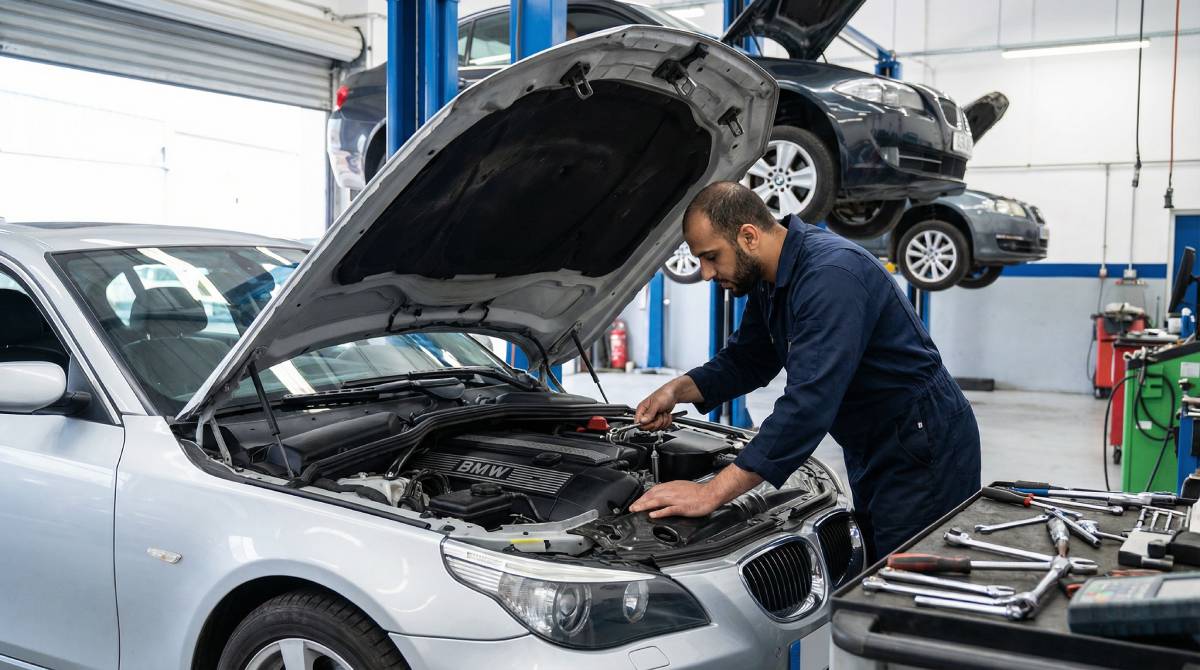
BMW vehicles are known for precision engineering, advanced electronics, and dynamic driving performance. However, this same complexity means that BMW cars require specialized repair, diagnostics, and servicing throughout their lifecycle. Generic workshops often fail to identify the root cause of BMW-specific issues, leading to repeat failures, unnecessary part replacement, and higher long-term costs.
This guide explains the most common BMW problems, how they are diagnosed correctly, and why working with BMW specialists is essential for reliable repairs and long-term vehicle health.
BMW engines deliver high performance, but they are also sensitive to maintenance quality, oil specifications, and cooling system condition. Some of the most frequent reasons BMW owners seek BMW engine repair include:
Ignoring early symptoms often leads to severe damage requiring a BMW engine rebuild rather than a targeted repair.
Proper BMW oil change intervals using manufacturer-approved oil are critical. BMW engines rely on precise lubrication and temperature control, especially in high-load driving conditions.
For accurate diagnostics and professional BMW engine repair, BMW owners should rely on experienced BMW experts with access to OEM-level diagnostic tools.
BMW automatic transmissions are smooth and responsive when maintained correctly. However, many transmission failures are caused by the widespread myth of “lifetime transmission oil.”
Common reasons for BMW transmission repair include:
BMW transmissions require correct fluid service, software calibration, and adaptation resets. Without proper diagnostics, workshops may recommend full replacement when targeted repair or reprogramming is sufficient.
A qualified BMW mechanic will always start with electronic diagnostics before mechanical intervention.
BMW vehicles are heavily dependent on electronic control units. Electrical issues are among the most common and misdiagnosed BMW problems.
BMW ECU / ECM Repair
The engine control unit (ECU/ECM) manages fuel delivery, ignition timing, and engine performance. Failures may be caused by:
Proper BMW ECU repair often involves testing, reprogramming, or module repair—not automatic replacement.
BMW FRM & Footwell Module Repair
The FRM (Footwell Module) controls:
Symptoms of FRM or BMW footwell module repair needs include non-functioning lights or windows and battery drain. Many FRM failures are repairable if handled by BMW electronics specialists.
BMW ABS Module Repair
The ABS module controls braking stability systems. Common signs of failure:
A professional BMW ABS module repair restores system safety without unnecessary part replacement.
All electrical issues require expert diagnostics and controlled programming environments.
BMW Suspension Repair and Ride Quality Issues
BMW suspension systems are engineered for precision handling but are sensitive to wear.
Common reasons for BMW suspension repair include:
Adaptive and air suspension systems require calibration after repairs. A non-specialized workshop may replace parts without recalibration, leading to poor handling and repeat visits.
Accurate diagnostics and alignment are essential components of professional BMW servicing.
BMW Brake Repair
Although BMW braking systems are durable, issues arise from:
Proper BMW brake repair includes electronic resets and system diagnostics, not just pad replacement.
BMW AC Repair
BMW climate systems are complex and integrated with vehicle electronics. Common AC issues include:
Professional BMW AC repair requires pressure testing, electronic diagnosis, and correct refrigerant handling.
BMW vehicles are not designed for generic repair approaches. They require:
A certified BMW specialist understands how mechanical, electronic, and software systems interact. Choosing a non-specialized workshop often results in repeated repairs, incorrect fault diagnosis, and higher ownership costs.
For reliable BMW automotive repair, working with proven BMW experts is not an option — it’s a necessity.
If your BMW requires professional attention, trust specialists who understand the brand at an engineering level.

Co-owner of Swedish Experts — dedicated to precision, safety, and excellence in chassis repair.
Off-duty — passionate cyclist and carp fishing enthusiast. Believes success in both business and hobbies requires strategy and patience.