Buying a used or salvage car from Copart has become a popular option for many UAE buyers – from private car enthusiasts to traders and dealers – looking for a great deal or a hard-to-find model. Copart is a global online auto auction platform that features all kinds of vehicles, including ordinary used cars as well as heavily damaged “salvage” vehicles destined for repair. The bargains can be tempting, but before you get swept up in the auction, it’s critical to understand the risks involved. Chief among these is the condition of the car’s chassis (frame). In this article, we explain what Copart is, why so many of its cars carry Salvage or Rebuilt titles, and why checking the chassis should be your top priority when buying these vehicles – especially in the UAE.
What is Copart and What Vehicles Does It Sell?
Copart is essentially a massive online marketplace for cars, including those that have been in accidents or declared total losses by insurance companies. In fact, Copart specializes in salvage and repairable vehicles, alongside clean-title used cars. You’ll find everything from relatively minor fender-bender cars to heavily wrecked or flooded vehicles. Many listings on Copart have a “salvage title,” meaning the car was written off by an insurer as a total loss due to damage or other issues. Some may even have a “rebuilt title,” indicating the vehicle was repaired and inspected to be roadworthy again in its country of origin. Buyers in the UAE often import these cars because the upfront prices are much lower than comparable local used cars. However, those low prices come with significant risk if the car has unseen structural problems.
Salvage vs. Rebuilt: A salvage title means the vehicle suffered major damage (accident, flood, etc.) and is not roadworthy until repaired. A rebuilt title means the salvaged car was repaired and certified safe by some authority, allowing it to be registered again. In theory, a rebuilt car should be roadworthy, but “rebuilt” doesn’t guarantee perfect repairs – issues can still lurk beneath the surface. Whether salvage or rebuilt, these cars must be approached with caution. The most critical component to examine is the chassis, because if the frame of the car is bent, cracked, or improperly repaired, everything else (engine, body, features) becomes secondary.
The Hidden Risks of Salvage Cars from Copart
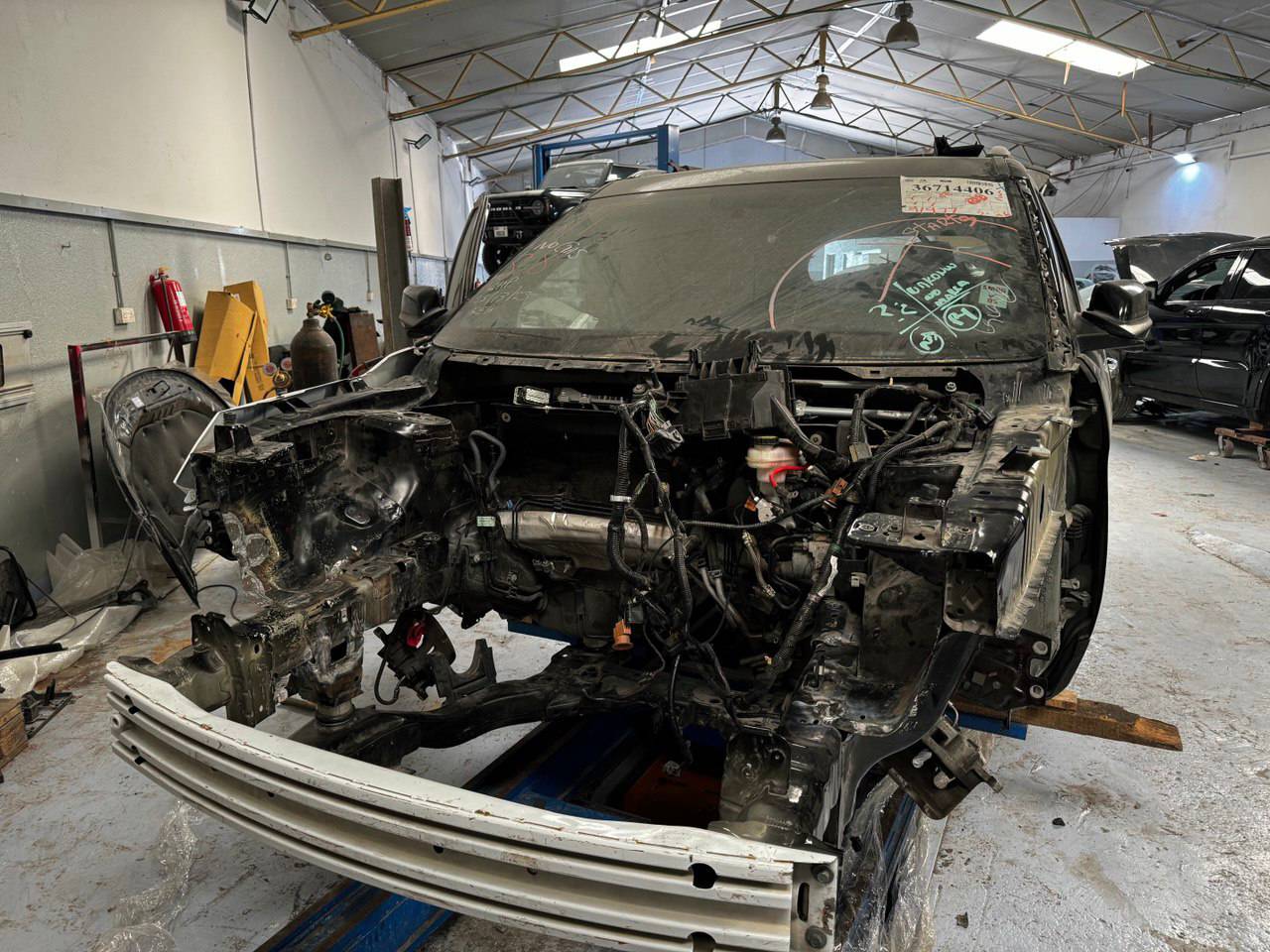
A severely damaged car at a salvage auction – vehicles like these may hide structural issues beneath the surface.
Purchasing a salvage vehicle can be a bit of a gamble. Often, what you see in photos or brief inspections isn’t the full story. Here are some key risks to be aware of when buying Copart vehicles, particularly salvage or rebuilt ones:
- Hidden Structural Damage: Salvage cars have usually been in serious accidents, which may have twisted or weakened their frames. Even if the exterior looks decent after repairs, the underlying structure might be compromised. As one shipping expert noted, salvage cars can have “hidden structural or mechanical problems that could make them unsafe to drive”. Damage to the chassis isn’t always visible to the naked eye – it could be hairline cracks in the subframe, a slightly shifted alignment of the chassis, or weakened metal in critical areas.
- Bent or Poorly Repaired Frames: It’s common for badly damaged cars to have bent frame rails or crumple zones. In a proper repair, a car’s frame should be straightened back to factory specifications using specialized machinery (or sections of the frame replaced entirely). Unfortunately, not all rebuilders do this correctly. Some overseas repair shops cut corners – they might weld pieces back together in a way that eliminates the original crumple zones (the areas designed to absorb crash energy), or they only roughly straighten the frame. A car with a crooked or badly patched frame may drive acceptably at low speeds, but it will never perform or protect you like it should. It might “dog-track” (not drive straight), wear out tires unevenly, and in a collision it could fail catastrophically. In the UAE, enthusiasts have observed that many imported salvage cars are patched up “with the least possible effort, subpar workmanship and parts to maximize the dealer’s profits”. In other words, the repairs might look fine on the surface but could be hiding major flaws underneath.
- Poor-Quality Overseas Repairs: Many Copart vehicles are repaired (to some extent) abroad before being shipped to the UAE – for instance, a car might be fixed just enough to run and move. The quality of these repairs can be very inconsistent. Some cars are expertly rebuilt; others are hastily patched together to flip for profit. Watch out for signs of shoddy repair work: mismatched welds on the chassis, fresh undercoat paint hiding welding cuts, misaligned body panels (indicating the frame beneath is off), or components from other cars cobbled together. A quick overseas fix might also ignore critical safety components. For example, there have been cases where airbag systems or seatbelt pretensioners were bypassed or faked to turn off warning lights, instead of being properly replaced. All these point to a car that is not truly safe or up to standard, even if it superficially appears roadworthy.
In summary, the integrity of the chassis is often the great unknown with salvage cars. A car may have a “rebuilt” label and a shiny new paint job, but if the frame underneath is bent by even a few centimeters – or if it’s been welded back together incorrectly – the vehicle could be unstable and unsafe. That’s why checking the chassis first is so important before you commit to further repairs or try to register the car for UAE roads.
Why Chassis Damage is a Serious Concern (Safety & Performance)
A vehicle’s chassis is essentially its skeleton – it is the foundational structure that everything else attaches to (engine, suspension, body panels, etc.). Any significant damage to this structure can have profound effects on safety and driving performance:
- Road Safety: Modern cars are engineered so that the chassis and crumple zones absorb impact energy in a crash, protecting the occupants. If a chassis has been previously bent or cracked, its ability to protect in a new crash is greatly diminished. Weak spots or malformed sections could collapse unpredictably or fail to channel crash forces properly. The result is an increased risk of injury in accidents. The UAE government recognizes this risk – it’s one reason they strictly control which salvage cars can be registered (more on that below) and have even considered outright bans on registering salvage imports for road use. Simply put, a structurally unsafe car is a danger not only to its occupants but to everyone on the road. This is not meant to be alarmist, but rather a factual reality: chassis integrity saves lives, and a car with hidden chassis damage is a rolling hazard.
- Vehicle Handling and Performance: Even outside of crash scenarios, a bent or misaligned frame will impact how a car drives. The suspension geometry will be off-kilter if the frame isn’t straight, leading to poor alignment that no amount of wheel adjustment can fully fix. The car may pull to one side, the steering wheel might sit off-center, or it could feel unstable at highway speeds. Braking hard in an emergency could cause the car to swerve if the chassis isn’t symmetric. Additionally, components attached to a misaligned frame (like engine mounts or suspension parts) can wear out faster or fail because they’re under abnormal stress. In short, a straight chassis is crucial for predictable handling and braking. If you want the car to perform as intended – and to have confidence in its behavior – the frame needs to be sound. A properly aligned chassis also ensures longer tire life and less strain on mechanical parts.
- Passing UAE Inspections (Registration): In the UAE, every car must pass a technical inspection to be registered for road use, and this includes scrutiny of the vehicle’s structure. A car with chassis damage or subpar repairs is very likely to fail the inspection. In fact, accident-related chassis issues are among the top reasons that 1 in 5 cars fail testing, according to an RTA official. The law is clear: if your vehicle fails the inspection, it cannot be registered or driven on public roads until the issues are fixed. So if you import a Copart car with unresolved frame damage, you might be stuck with an unregistrable vehicle. Inspectors will look for signs of bent frame rails, welding on the chassis, or misalignment. If they suspect any structural problem, they will demand a detailed chassis evaluation (a Computerized Chassis Measurement report – discussed in the next section) before allowing the car to pass. Many UAE buyers don’t realize this until it’s too late. Imagine spending money on a car, shipping, and basic repairs, only to have RTA refuse to register it because the frame is off – now you have a costly paperweight unless you can fix the chassis. Thus, checking and correcting chassis issues early isn’t just about safety, it’s about being able to legally use the car at all.
UAE Regulations: RTA Inspection and Structural Integrity
The UAE, through agencies like Dubai’s Roads & Transport Authority (RTA) and equivalent authorities in other emirates, has strict standards for vehicle roadworthiness. Imported used vehicles, especially those that were salvage or rebuilt, must meet these standards:
- Salvage Cars Must Be Fully Repaired: It is legal to import and register a salvage-title car in the UAE only if it has been properly repaired and passes the RTA inspection. This means you can’t just ship a wreck and start driving it; the car must be restored to a safe condition. Not all salvage cars will qualify – if the damage is too severe or the repairs are inadequate, the car will not pass the mandatory tests. The RTA (and Abu Dhabi’s inspection centers, etc.) essentially treat these cars the same as any heavily accident-repaired local car: the structure must be verified. If a chassis is bent or poorly repaired, expect a failing grade. The vehicle will be rejected for registration until the frame is fixed and proven sound.
- Technical Inspection (Shasis Test): During UAE vehicle inspections, the chassis and all structural components are checked. Any signs of trouble – such as chassis welds, misalignment, or even serious rust holes – are grounds for failure. Inspectors may visually check the underbody and also note if the car doesn’t sit level or has alignment issues (clues to an underlying frame issue). As mentioned, if they suspect structural damage, they will require a Computerized Chassis Measurement (CCM) test report from an approved center. This is effectively an official demand to X-ray the car’s skeleton. The owner must pay for this specialized inspection (around AED 500) and get a detailed report of the frame’s measurements. If the report shows the chassis is within manufacturer specifications, the car can proceed to be registered. If not, you’ll be instructed to repair the chassis and then undergo a re-inspection (often for a smaller re-test fee). There is no way to bypass this – a car with a bad chassis cannot be legally put on the road in the UAE. In fact, you have 30 days to resolve any fail; beyond that, the registration won’t be renewed and you start incurring fines. Driving a car that failed due to structural issues is illegal and dangerous, so authorities are quite strict about parking such vehicles until they’re fixed.
- Nationwide Standards: All emirates enforce similar rules. Dubai’s RTA is often highlighted, but Abu Dhabi’s ADNOC inspection centers and others follow the unified vehicle safety standards regarding chassis integrity. Abu Dhabi, for example, explicitly offers CCM chassis measurement services at their inspection centers, showing that they actively check alignment when a car has a repair history. The bottom line is that a bent frame is a showstopper nationwide – wherever you register in the UAE, the car’s “backbone” must be straight and sound. This emphasis exists for good reason: as the authorities have noted, getting structurally compromised cars off the roads has made the roads safer. For you as a buyer, it means you must ensure any Copart purchase can meet these standards, or you’ll face a lot of headaches and expense.
The Importance of a Computerized Chassis Measurement (CCM) Inspection
By now, it should be clear that verifying the chassis condition is paramount. But how can you thoroughly check a car’s chassis for hidden damage? The answer is through a Computerized Chassis Measurement (CCM), often done with systems like Car-O-Liner. This is a high-tech frame inspection that goes far beyond a visual check.
What is CCM? It’s essentially a precise digital scan and measurement of the vehicle’s frame. Technicians mount the car on a specialized alignment bench and attach electronic sensors or targets to key points on the chassis. The Car-O-Liner (or similar) system then compares the vehicle’s dimensions to the original factory specifications, in all dimensions. It can detect if any part of the chassis is bent, twisted, shifted, or stretched beyond allowable tolerances – with millimeter precision. Even misalignments too subtle to see by eye will be flagged. The result is a detailed report showing which points (if any) are out of alignment.
Not only does this tell you if the chassis is damaged, it also tells you where and how much. For example, the CCM might reveal that the front left frame rail is 10 mm shorter than the right (indicating a crumple that wasn’t fully pulled out), or that the rear section has a slight “diamond” misalignment. This information is invaluable. In Dubai, the RTA itself relies on the Car-O-Liner computerized measurement system for official inspections – which underlines how trusted and necessary this technology is for structural checks. In fact, an RTA-certified CCM report is often required to clear a previously damaged vehicle for registration.
Why you should get a chassis measurement done:
- Ensure the Car is Structurally Sound: A CCM inspection will confirm if the car’s “bones” are straight. If the car passes, you have peace of mind that the chassis is within spec and the vehicle is structurally safe to drive. If it fails, you know the car has serious issues that need addressing before it’s roadworthy. It’s much better to discover this early. As a buyer, you ideally want to do this before pouring money into cosmetic fixes, or at least before final registration. It can save you from investing in a hopeless cause. If the chassis is found to be bent beyond repair (or beyond economic sense to repair), you’re better off knowing that immediately – you might choose to scrap the project or use the car for parts rather than throwing good money after bad.
- Safety and Performance Benefits: Using advanced frame measuring tools means the repair shop can restore the chassis with unrivaled precision, back to factory dimensions. When a chassis is properly aligned, the car will track true, handle correctly, and protect you in a crash as it was designed to. There’s no guesswork – the machine literally guides technicians on what needs straightening. As one UAE workshop notes, the Car-O-Liner system allows them to guarantee the vehicle is structurally sound, reducing the risk of future accidents, and that a properly aligned chassis contributes to optimal performance, handling, and longevity of the vehicle. In short, a CCM check (and any subsequent alignment corrections) helps ensure your Copart bargain isn’t a nightmare to drive or a hazard on wheels.
- Meet RTA Requirements with Confidence: If you have a CCM report from a reputable, RTA-approved center showing the chassis is within specs, you are in a strong position when it comes time for the official inspection. This is essentially the same test the authorities would run. Presenting a clean chassis report can streamline your registration process, and if repairs were needed, you’ll have documentation proving the structural integrity. On the other hand, if you skip this step and hope for the best, you may find yourself at the testing center facing a failure – after which you’ll still have to do the CCM test anyway. It’s wiser to identify and fix issues before going to RTA. Consider it part of your due diligence and investment protection when importing a vehicle.
Identify Chassis Issues Before Investing Further
The overarching advice for UAE buyers considering Copart (or any salvage auction) is this: know what you’re getting into, especially structurally, before you commit serious money. Ideally, if you can, inspect the car’s chassis prior to purchase. This might mean hiring an inspection service at the auction site (Copart Middle East, for instance, offers on-site inspections with chassis checks for a fee), or scrutinizing photos and records for any mention of “frame damage” on the auction listing. Many Copart listings will indicate if there’s known frame damage. Always run the VIN and get a history report – if it shows a severe collision, assume there is structural damage unless proven otherwise.
For cars already purchased and shipped to the UAE, make a chassis inspection your first order of business upon arrival. Before you spend on paint, upholstery, or other mods, get the frame measured. If issues are found, you can then make an informed decision: repair the chassis (get quotes, see if it’s economical) or abandon the project. It might be disappointing to find a major fault, but catching an unsafe or unfixable structure early will ultimately save you money and protect you from danger. As the saying goes, “don’t throw good money after bad.” A bent frame that can’t be fixed to standard is exactly the kind of bad investment you want to avoid.
Chassis First, Always
When buying a car from Copart for use in the UAE – whether you’re a business bringing in inventory or an individual hunting for a deal – always prioritize chassis integrity. Copart can be a source of affordable cars, but many of those cars have a troubled past. The chassis carries the scars of that past, and you need to uncover them. By thoroughly checking the chassis (through careful inspection and computerized measurement), you safeguard your safety, your wallet, and your legal ability to drive the car.
In the UAE context, this advice is even more pertinent. The RTA and related authorities have put systems in place (like CCM tests and stringent inspections) to weed out structurally unsound vehicles – and that protects all of us on the roads. As a buyer, working with those systems rather than against them is just smart. Use the tools and expertise available: many specialized garages in the UAE (including independent frame alignment shops with Car-O-Liner equipment) can assist in inspecting and even repairing a chassis to meet the required standards. The small cost of a chassis check is nothing compared to the potential cost of a hidden defect – failed registration, costly repairs, or worst of all, a safety failure while driving.
In summary, checking the chassis first is about doing your homework and not leaving critical safety to chance. A solid car needs a solid foundation. If you ensure the chassis is straight and strong, you can then proceed with confidence to rebuild, register, and enjoy your Copart purchase. But if the foundation is shaky, think twice. When it comes to buying salvage vehicles, remember that what lies beneath truly matters – and a proper chassis inspection will tell you the truth about your prospective car’s integrity. Your life, and your investment, may depend on it.
Stay safe, and happy motoring – with a straight chassis!
Co-owner of Swedish Experts — dedicated to precision, safety, and excellence in chassis repair.
Off-duty — passionate cyclist and carp fishing enthusiast. Believes success in both business and hobbies requires strategy and patience.