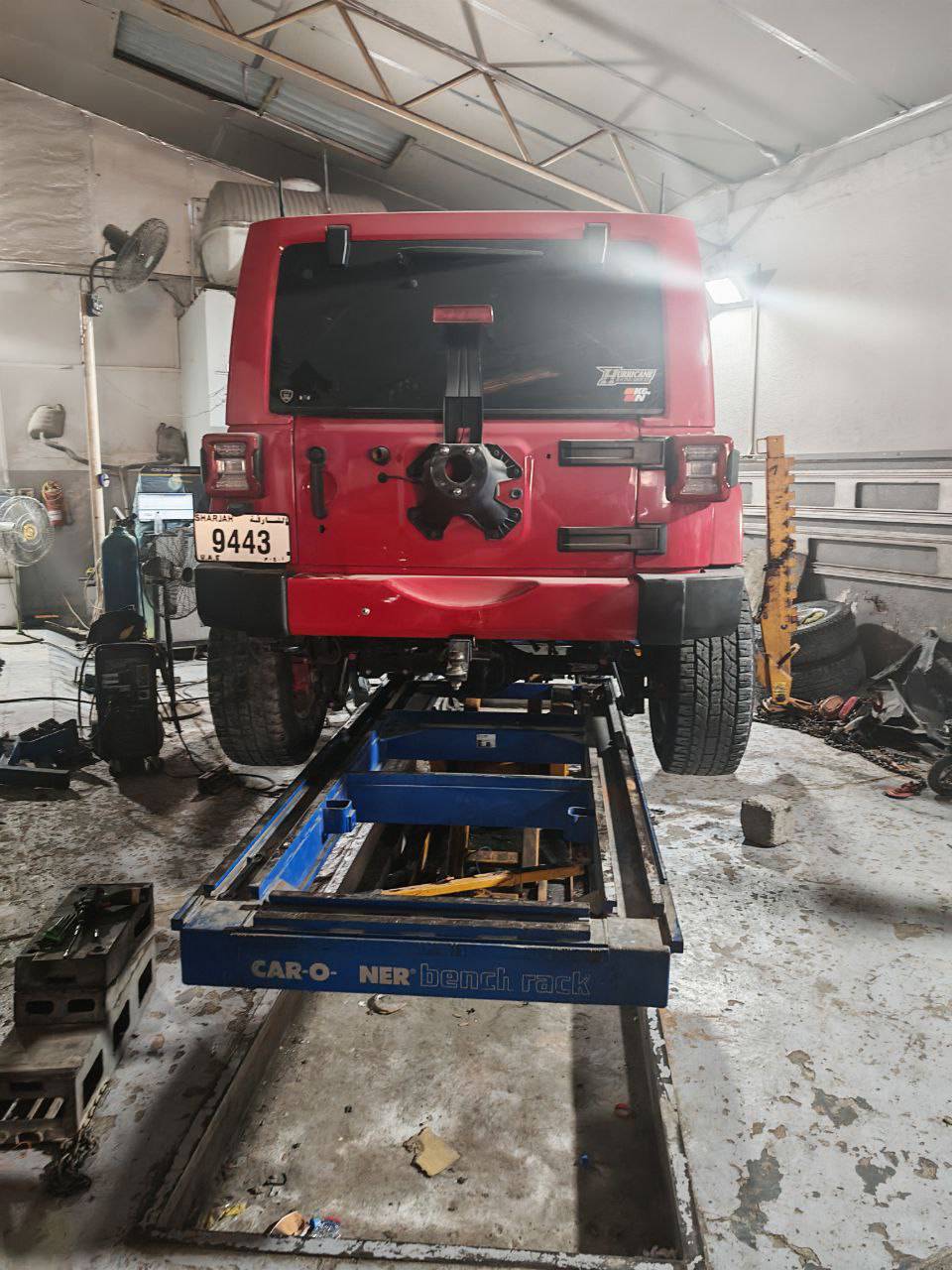
The chassis (or frame) of your car is its structural backbone – it supports all other components and maintains the vehicle’s shape and alignment. A healthy chassis is critical for safety, handling, and longevity of the vehicle. When the chassis is damaged or bent (for example, from a collision or harsh road impact), it can lead to serious issues like poor handling, uneven tire wear, and even safety risks. Ignoring chassis damage can weaken the car’s entire structure and compromise performance over time. In extreme cases (such as a major accident), the frame can be so distorted that the car is considered a total loss. Even a slight bend or misalignment constitutes frame damage and should be addressed promptly.
Chassis repair entails restoring the vehicle’s structural integrity to factory specifications. This can involve straightening a bent frame, welding cracks or breaks, and reinforcing weakened areas. The goal is to ensure the chassis is perfectly aligned and as strong as it was before the damage, so the car drives straight and remains safe. High-end repair centers utilize advanced techniques to fix chassis issues, going beyond cosmetic fixes and addressing the core structure of the vehicle. By investing in proper chassis repair, you not only make your car safer on the road but also extend its lifespan by preventing future problems that structural weaknesses could cause.
Accident-Related Chassis Damage
Major chassis damage often results from car accidents or collisions. In a crash, the impact force can bend, twist, or crumple portions of the frame. For example, a strong front or side collision might push the chassis out of alignment, resulting in conditions mechanics describe as “side sway,” “sag,” or “diamond frame” distortions (where the frame is bent sideways, vertically, or into a skewed diamond shape). Even a moderate fender-bender can cause a twist in the chassis, especially if one corner of the car takes a hit – the frame may get torsionally warped so that one corner is higher than the opposite, which can make the car lean or “dog track” (not drive straight). After any significant accident, it’s crucial to have the chassis inspected because damage isn’t always visible from the outside. The car might look fine but still have bent frame sections or cracked welds hidden under the body panels.
How can you tell if your chassis might be damaged after an accident? There are a few warning signs to watch for:
- Poor alignment or handling: The car pulls to one side, or the steering feels off-center even after wheel alignment. You might experience vibrations or the vehicle “wandering” on a straight road.
- Uneven tire wear: A bent chassis can throw off suspension geometry, causing tires to wear unevenly or prematurely.
- Misaligned body panels: Doors, trunk, or hood might not close properly or gaps between panels look uneven if the underlying frame is distorted.
- Strange noises: You may hear new creaks or rattles from the frame or underbody, especially over bumps, indicating that parts of the chassis are under abnormal stress.
- Visible frame damage: If you look underneath and see bent metal, cracks, or welds that have torn, these are obvious signs of structural damage. Sometimes paint flaking off the frame or slight buckling in the floor pan can hint at problems.
If you notice any of these after a collision, it’s a red flag that your chassis likely needs repair. Driving with a compromised chassis is dangerous – it can reduce the vehicle’s crash protection and put stress on other components. It’s best to bring the car to a professional chassis repair center for a thorough inspection. Skilled technicians will typically use precision measurement tools to diagnose the full extent of accident damage, including any “hidden” misalignment that isn’t apparent to the naked eye. Modern collision repair shops in Dubai have computerized measuring systems that can detect if, say, the front frame rails are even a few millimeters off spec, which a simple visual check might miss.
Importantly, if the accident is severe, insurance companies may be involved in the repair process. In the UAE, if your car has been in a major crash that affected the chassis, the Roads & Transport Authority (RTA) often requires a special chassis inspection (a CCM test) after repairs, to ensure the frame has been fixed correctly. (This test usually costs around AED 500 in Dubai and issues a report on the chassis alignment.) You cannot register a vehicle that has failed an official chassis inspection – you’ll be required to repair it properly and pass a re-test within 30 days. This underscores why using a qualified repair center is critical. A good shop will not only straighten the frame but also provide documentation or certificates showing the chassis is back to factory specs – which helps with insurance claims and legal requirements.
Preventative Chassis Diagnostics and Inspections
Chassis issues aren’t only a post-accident concern. Even without a major crash, preventative chassis diagnostics can save you from trouble down the road. Over time, regular driving in the UAE can introduce stresses to your vehicle’s frame. Think about the cumulative effects of speed bumps, potholes, or even curb strikes when parking – these minor impacts can, on occasion, tweak the alignment of the chassis or suspension mounting points. For instance, hitting a curb at speed or a deep pothole might cause a slight twist in the chassis or bend a subframe, even if you don’t immediately notice damage.
Additionally, UAE’s climate and conditions can play a role. While rust is less common in the dry desert environment, it’s not unheard of – especially for older cars or those imported from overseas climates. Corrosion can weaken sections of the chassis over years. A small patch of rust, if left unchecked, can spread and reduce the metal’s strength, potentially leading to structural issues. Regular underbody inspections can catch rust early, allowing it to be treated or the affected section replaced before it compromises the whole frame.
Preventative chassis inspections are essentially health check-ups for your car’s structure. A comprehensive inspection will involve:
- Visual examination: A technician looks for any signs of distress like cracks, bent metal, or rust on frame rails, crossmembers, and critical areas around the suspension and engine bay.
- Mechanical measurements: Traditionally, mechanics might use tape measures or tram gauges to compare key distances between chassis reference points (for example, measuring diagonals across the engine bay or between suspension pickup points). Any discrepancy could indicate misalignment.
- Digital chassis measurement: Many premium workshops in the UAE now use Computerized Chassis Measurement (CCM) systems for precision. For example, the Car-O-Liner laser measuring system is common – the vehicle is mounted on a special alignment bench and electronic sensors are attached at various manufacturer-specified points on the chassis. The system then creates a 3D model of the frame and compares the dimensions against the factory specs stored in its software. This digital scan can detect deviations of even a few millimeters in length, width, or height of the chassis, far beyond what the eye or a tape measure could catch.
By doing periodic chassis diagnostics – for instance, as part of a preventive maintenance schedule or a pre-purchase inspection when buying a used car – you can catch structural issues early. This might reveal, for example, that a used car had an unreported accident because the chassis measurements are off, or simply give you peace of mind that everything is straight and sound. If an inspection finds something minor, you can address it proactively (maybe a small realignment or welding a crack) before it becomes a bigger, costlier problem.
Many car owners in Dubai opt for a chassis check-up if they experience persistent alignment problems or unusual noises that standard servicing doesn’t fix. Considering the relatively modest cost of a basic chassis inspection (around a few hundred Dirhams), it’s a worthwhile investment for the long-term safety of your vehicle. In short, you don’t have to wait for a crash to think about your chassis – preventative diagnostics can keep your car’s “skeleton” in top shape and catch issues that might otherwise go unnoticed until a failure occurs.
The Chassis Repair Process: Step by Step
When you take your vehicle to a premium chassis repair center in Dubai, the repair process is thorough and methodical. High-end workshops follow strict procedures to ensure that by the end of the service, your car’s frame is as good as new. Here’s what a typical chassis repair process entails:
- Inspection & Diagnosis: First, expert technicians perform a detailed inspection of the vehicle’s underbody and frame. This includes visual checks for any bends, cracks, or signs of stress, as well as measurement checks. In a top workshop, this step likely involves a computerized 3D chassis measurement. Technicians will mount the car on a frame alignment bench and use a digital measuring system (such as Car-O-Liner) to pinpoint all misalignments or damage with millimeter accuracy. Even hidden structural issues (like a front frame rail that’s slightly raised or a crossmember that shifted in a collision) will be identified in this stage. The outcome is a full damage report or measurement printout showing which areas of the chassis need correction. This precise diagnosis allows the team to plan the repair correctly from the start.
- Repair Plan & Estimate: After identifying the issues, the shop will formulate a repair plan. They’ll determine whether the chassis can be straightened or if any sections need to be cut out and replaced. For example, a minor misalignment might be fixed by controlled pulling on a frame machine, whereas a severely crumpled front tip might require welding in a new section. At this stage, you’ll receive a detailed estimate of the work needed, parts, labor, and costs. If the repair is accident-related, the workshop can liaise with your insurance provider to get approval for the repairs. A premium center will communicate clearly with you, explaining the required repairs and the rationale behind them, so you know exactly what will be done and why.
- Frame Straightening and Alignment: The core of chassis repair is the actual straightening of the frame. The vehicle is secured on a heavy-duty frame straightening machine (frame rack). Using hydraulic arms or towers, technicians will attach clamps and chains to the bent sections of the chassis and carefully pull them back into alignment. This is where the earlier computerized measurements are put to use: the machine’s targets/sensors continuously measure the chassis shape during pulling, acting as a digital blueprint guiding the repair. The technicians will pull, relax, and adjust gradually, often re-measuring multiple times, until the chassis dimensions match the factory specifications within a tiny tolerance. Precision is key – modern systems like Car-O-Liner’s Vision2 will show live readings, allowing techs to know when, say, the left frame rail has been brought down those last 5 millimeters into spec. This process must be done carefully and sometimes slowly. Excessive force or heat is avoided because the chassis must be realigned without introducing new weaknesses (overheating high-strength steel, for instance, can reduce its strength). In a premium shop, only trained structural repair specialists handle this equipment, ensuring that the chassis is straightened safely and correctly. By the end of this step, the car’s frame should physically be back to its correct shape.
- Structural Repairs (Welding & Reinforcement): With the chassis pulled back into alignment, the next step is to repair any cracks, tears, or weakened sections of the frame. Commonly, this involves welding. Technicians will weld up any cracks or separation in the metal and may also weld in reinforcement plates at critical points to restore full strength. If any section of the chassis was too damaged to straighten (for example, a part of a frame rail that crumpled or a section infected by heavy rust), that portion may be cut out and a new piece of metal or a factory frame section will be grafted in. This is done following manufacturer guidelines – manufacturer-approved equipment and techniques are used so that the repair meets original standards. For instance, on modern cars with high-strength steel or aluminum chassis components, specific welding techniques or rivet-bonding (gluing and riveting) might be required. A high-end repair center in Dubai will have the tools and expertise for these advanced materials. If the vehicle has a unibody chassis, the structural parts like inner fenders, strut towers, or floor pans might be realigned or replaced as needed. All welding is performed by certified welders to ensure durability and safety. The philosophy is that after repairs, the fixed area should be as strong as the factory intended or even reinforced slightly for longevity.
- Alignment of Connected Systems: Often, chassis damage goes hand-in-hand with other issues. During the chassis repair process, the workshop will also check related components – for example, the suspension mounting points and alignment. Premium shops include a suspension check as part of chassis repair, to ensure that once the frame is straight, the wheels and suspension are correctly aligned too. They might use wheel alignment machines to verify everything is pointing true. If any suspension arms or steering components were bent in the accident, those will be replaced at this stage. Additionally, any damaged mounting brackets, engine cradle misalignments, or body mounts are corrected. If your car has advanced driver assistance systems (ADAS) like lane assist or adaptive cruise control, those sensors would also be realigned or recalibrated now, since a chassis shift can throw off their calibration.
- Quality Control & Verification: The final step is perhaps the most important for your peace of mind. Once all repairs are completed, the technicians perform a thorough quality check and final inspection. The car goes back on the measuring bench for a second full measurement scan – essentially a repeat of step 1 – to confirm that every spec is within the manufacturer’s tolerance. A printout or digital report may be generated, showing before-and-after measurements. Premium centers will provide this to demonstrate the chassis is now straight. They will also do a road test (if applicable) to ensure the car drives correctly (no pulling, no abnormal noises). All bolts, welds, and repairs are double-checked. In Dubai, if an RTA certification is required (as mentioned earlier), the shop will either arrange the official CCM test or issue you documentation that the chassis repair was done to spec. Often, after passing an RTA-approved chassis measurement, you’ll receive a CCM certificate confirming the structural integrity, which is useful for future resale or registration needs.
- Finishing Touches: As part of wrapping up, any removed parts (like body panels taken off to access the frame) are reinstalled and aligned properly. If painting is needed (for example, if a new section was welded in), the vehicle may go through the body shop and paint booth to refinish the repaired areas. Finally, the car is cleaned and detailed. High-end repair centers take pride in not just fixing the hidden damage but also returning your vehicle to you in impeccable condition externally.
Throughout this process, documentation is maintained. You can expect a premium shop to give you a rundown of all work done, and many will offer a warranty on chassis repairs – for instance, a guarantee that the frame will remain straight and the repairs will hold up, often for the lifetime of the vehicle ownership. This step-by-step approach ensures that by the time you get your car back, it’s structurally sound, safe to drive, and performs as it should, if not better.
Estimated Cost of Chassis Repair in the UAE
One of the big questions customers have is: How much will chassis repair cost? The answer can vary widely depending on the extent of damage, the vehicle make/model, and the shop’s labor rates. In Dubai (and the UAE in general), chassis and collision repair costs typically range from a couple of thousand dirhams to well over ten thousand dirhams. According to industry data, the average collision repair (which includes frame/chassis work along with body panels, etc.) is around AED 4,500, with typical jobs ranging approximately between AED 2,500 up to AED 12,000. Chassis-specific repairs are a major component of those costs.
For minor chassis issues, the cost might be on the lower end. For example, if your car’s frame just needs a slight realignment without any part replacements, the labor might just be a few hours on the frame machine – this could cost, say, AED 1,000 to AED 2,000 in total. On the other hand, severe chassis damage that requires cutting out sections, extensive welding, and many hours of labor can push the bill much higher. Repairing a cracked or bent chassis can easily run into several thousand dirhams. One Dubai workshop notes that fixing a chassis crack can range roughly AED 2,000 to AED 10,000 depending on the car and severity. Luxury cars or performance vehicles tend to be on the higher side of costs, because they may use expensive materials (like aluminum or carbon-fiber reinforced sections) and often require specialized repair techniques and replacement parts. In fact, if you drive a high-end brand, you should be prepared that chassis repairs will be at the upper end of the range due to the precision required and higher hourly labor rates for certified technicians.
To put things in perspective: a member of the Dubai community shared that he received quotes of about AED 7,000 for a chassis repair on a car valued at AED 12,000. While that might seem disproportionate, it highlights that chassis work is complex and labor-intensive – it often involves expensive equipment and highly skilled labor, hence the higher cost. If the cost of a chassis repair approaches the value of an older car, sometimes owners opt not to go through with it. But for newer or valuable vehicles, restoring the chassis is usually worth it to preserve the car.
What factors influence the cost? A few key ones include:
- Severity and location of damage: A small tweak in the front frame might be fixed with tension pulls in a day, whereas a heavily bent frame or multiple damaged sections (front and rear, for example) will require more time and possibly parts replacement.
- Parts needed: If sections of the chassis need replacing, the cost of those parts (and shipping if not readily available) adds up. A new OEM crossmember or subframe can cost a lot on its own.
- Type of vehicle: Larger vehicles (SUVs, trucks) have bigger, heavier frames that might take more effort to straighten. Luxury and sports cars often use lightweight alloys or special construction that require extra care or certified facilities – for instance, repairing an aluminum Audi or a carbon-fiber chassis on a supercar is more expensive and can only be done at specialized shops.
- Labor and expertise: High-end chassis repair specialists undergo training and certification. Their labor rates may be higher, but you are paying for proper repairs. The total hours of labor significantly affect cost – chassis work can be time-consuming.
- Additional work: Often, chassis repair comes with ancillary repairs (suspension components, body panels, paint). The quotes you receive might include those. For example, if an accident bent the chassis and also damaged the bumper and radiator, the full repair quote will cover everything. Here, we’re isolating chassis-related costs, but in real life they blend together.
In the UAE, insurance can cover much of the cost if the damage is from a covered accident. With comprehensive insurance, you typically pay the excess/deductible and the insurer pays the rest to the workshop. Premium workshops in Dubai usually are experienced in working with insurers and can help manage the claim. However, if you’re fixing chassis damage out of pocket (for instance, to pass the RTA inspection on a car that had a prior unrepaired issue), you’ll want to get an estimate first and weigh the expense. Always get the chassis inspected and a quote prepared by a reputable shop – and be cautious of any garage that offers a “too good to be true” low price. Quality chassis repair has a cost, but it’s an investment in your car’s safety.
To summarize, minor chassis repairs might cost under AED 2k, moderate collision repairs are often AED 3k–7k, and major structural overhauls can be AED 8k–15k or more. Always request a detailed breakdown so you know what you’re paying for. And remember, safety comes first – it’s worth ensuring the job is done right by specialists, even if it’s a bit more expensive, rather than cutting corners on such a critical component of your vehicle.
What to Expect at a Premium Chassis Repair Workshop
Taking your car in for chassis repair can be a daunting prospect, but a premium automotive repair center in Dubai will strive to make the experience as smooth and transparent as possible. Here’s what you can typically expect during the service at a high-end chassis inspection and repair workshop:
- Expert Consultation and Diagnosis: From the moment you arrive (or when your car is picked up), you’ll be met by knowledgeable service advisors or engineers. They will discuss any concerns you have and ask about the history of the issue (accident details or symptoms you’ve noticed). The vehicle will then undergo the thorough inspection process as described earlier. A top workshop will use state-of-the-art diagnostic tools (like the digital measuring systems) right from the start to leave no doubt about the chassis condition. You can expect the technicians to be highly trained specialists – often certified specifically in frame repair and familiar with manufacturer standards. At a premium shop, customer communication is key: they will likely show you the measurement reports or even photographs of any damage under the car, so you understand what’s wrong.
- Transparent Estimate and Repair Plan: Once the diagnosis is complete, the service team will provide a clear breakdown of the work needed. This will detail the repairs, parts to be replaced (if any), the timeline, and the cost. Premium centers in the UAE operate with transparency – there should be no vague descriptions. Instead, you might see line items like “Frame straightening – left front rail” or “Weld and reinforce crack in crossmember,” each with labor hours noted. Feel free to ask questions; high-end workshops will gladly explain the process to you. If insurance is involved, the shop will coordinate on approvals, and you’ll be informed of any deductible or out-of-pocket expenses before work begins. The key is that you know what will happen to your car. This stage may also involve signing off on the work to be done.
- Use of Advanced Equipment: When the repair work commences, you can be assured that a premium chassis repair workshop is using manufacturer-approved, advanced equipment for the job. For instance, they will have modern frame racks, hydraulic pullers, and computer-guided measuring systems on-site. Many top garages in Dubai invest in systems like Car-O-Liner or Celette, which are the gold standard for structural repairs. This means your car is in an environment that meets international repair standards. As a customer, you might not directly see all these tools (as the work happens in the service bays), but the results show in the quality of repair. Knowing that the shop has cutting-edge tech should give you confidence – repairs done with digital precision are more likely to meet OEM tolerances for structural integrity. In fact, insurers often prefer such shops because they can provide documentation that the frame was restored correctly.
- Skilled Technicians and Quality Workmanship: The technicians working on chassis repairs in a high-end shop are specialists. Many will have certifications (like I-CAR or manufacturer training) proving their expertise in structural repairs. You can expect meticulous workmanship. This isn’t a quick patch-up; it’s a careful restoration of your vehicle’s foundation. Premium centers often assign their most experienced staff to chassis and frame tasks. If your car is a luxury or exotic brand, you might even have brand-specific specialists (e.g., a technician trained on aluminum Jaguar/Land Rover bodies, etc.). Quality control is ingrained in the process – each critical stage might be double-checked by a supervisor or by using measurement tools to verify the outcome. The welding will be neat, the alignments precise. Essentially, a premium shop treats your car as if it were their own or better, and they have the expertise to back it up.
- Customer Updates and Transparency: During the course of the repair, if it’s an extended job (say a few days or more), a good workshop will keep you updated. They might call or message you with progress, especially if any new issues are found or if timelines shift. Many high-end garages in Dubai also offer amenities like a comfortable waiting lounge if you’re there for a short inspection, or even a courtesy car or drop-off service if your car will be in the shop for a longer period. The idea is to minimize the inconvenience to you while your car is being fixed. Don’t hesitate to communicate with the service advisors; they are there to answer your questions at any point.
- Completion, Handover, and Documentation: When the chassis repair is completed, the workshop will prepare the car for handover. At pickup time, they will typically review the work done with you. They may show you the final chassis measurement report indicating everything is back within spec (many customers find this reassuring to see, essentially a before-and-after of their car’s “skeleton”). You should also receive any relevant documentation, such as the RTA chassis certificate if an official test was conducted post-repair, or a warranty document for the repairs. High-end repair centers often provide a guarantee on their chassis work – for example, a certificate that guarantees the repairs for X years or that the frame is restored to manufacturer standards. Make sure to get this in writing, as it’s a hallmark of a quality shop standing behind their work.
- Post-Repair Expectations: After you get your car back, it should drive like it did before the damage (or better, if things like suspension were corrected). A properly repaired chassis will be unnoticeable in everyday driving – no more pulling, alignment issues, or odd noises. You can expect the paint finish to be matching (if any bodywork was involved) and the car cleaned. Premium workshops pay attention to details; some might even perform a complimentary interior vacuum or a basic detailing after the repair as part of their service. Importantly, your vehicle is now safe to drive. If you still feel anything off, a reputable shop will encourage you to bring it back for a follow-up check. But chances are, if it’s truly premium service, the job will be done right the first time.
In summary, at a high-end chassis inspection and repair center in Dubai, you are paying for peace of mind and top-notch service. You’ll get accurate diagnostics, quality repairs using the latest technology, transparent communication, and assurance that your car’s structural integrity is fully restored. The process may require an investment of time and money, but the reward is knowing that your vehicle is safe and sound for you and your family on the road. As the slogan might go – drive out as if the accident never happened.
Chassis repair is one of the most critical types of automotive repair, especially in a car-centric place like Dubai where safety and performance are paramount. Whether you’ve been in an accident that left your car’s frame worse for wear, or you’re simply being proactive about your vehicle’s structural health, understanding the cost, process, and expectations can help you make the best decisions. A solid chassis means your car will handle properly, all other components (engine, suspension, body) will align as intended, and crucially, the vehicle will protect you as designed in the event of another collision.
In the UAE, there are cutting-edge facilities and expert professionals capable of bringing even badly damaged chassis back to manufacturer specifications. We’ve explored how they do it – using digital measuring tools, hydraulic straightening equipment, and skilled craftsmanship – and what you, as a customer, should anticipate throughout the journey. The costs for chassis repair can be significant, but by knowing the range and what factors into those costs, you can approach the repair with eyes open and perhaps work with your insurer to cover the expenses.
Always choose a reputable, high-standard repair center for chassis work. The difference will show not just in the final bill, but in the quality of repair and your overall experience. With the right team on the job, your car’s chassis can be restored to factory-new condition, ensuring safety and reliability for years to come. Remember, the chassis is the foundation of your car – keep it strong, and you’ll drive with confidence on Dubai’s roads. Safe driving!
Co-owner of Swedish Experts — dedicated to precision, safety, and excellence in chassis repair.
Off-duty — passionate cyclist and carp fishing enthusiast. Believes success in both business and hobbies requires strategy and patience.