Accidents can be stressful, and even after a minor fender-bender, you might wonder if your car has hidden damage. One critical area to assess is the chassis, also known as the frame – essentially the vehicle’s backbone that supports all components and protects you in collisions. Damage to the chassis isn’t always obvious, but it can affect your car’s safety and performance down the line. In this guide, we’ll explain what the chassis is, how to spot common signs of chassis or structural damage after an accident, and steps for a basic at-home inspection. We’ll also discuss why even minor frame damage is serious, when to seek a professional computerized inspection, and how chassis issues impact safety, tire wear, alignment, and resale value. Our goal is to empower you with knowledge so you can confidently take the next steps in ensuring your vehicle’s structural health – all in a reassuring, educational tone.
What Is the Chassis and Why Is It Important?
The chassis of your car (often called the frame) is the underlying structural skeleton that everything else attaches to. It’s like the bones of a body, giving the car shape and strength. All major components – the engine, suspension, wheels, and body panels – mount to this rigid frame. In everyday driving, the chassis distributes stresses from turning, accelerating, and braking, keeping the vehicle stable and aligned. In a crash, the chassis is engineered to absorb and redirect impact forces away from the passenger cabin, acting as a shield to protect you.
Modern cars typically use a unibody construction, meaning the chassis and body are a single integrated structure. This design allows crumple zones that deform in a collision to absorb energy for safety. The trade-off is that even a seemingly minor crash can tweak or bend the structural parts of a unibody chassis. (Older trucks and large SUVs may have a body-on-frame chassis, which is a separate ladder-like frame; these are very strong but still can bend under severe force.) No matter the type, the chassis is critical: a damaged chassis can weaken the vehicle’s crash protection, cause alignment and handling problems, and lead to costly issues if left unaddressed.
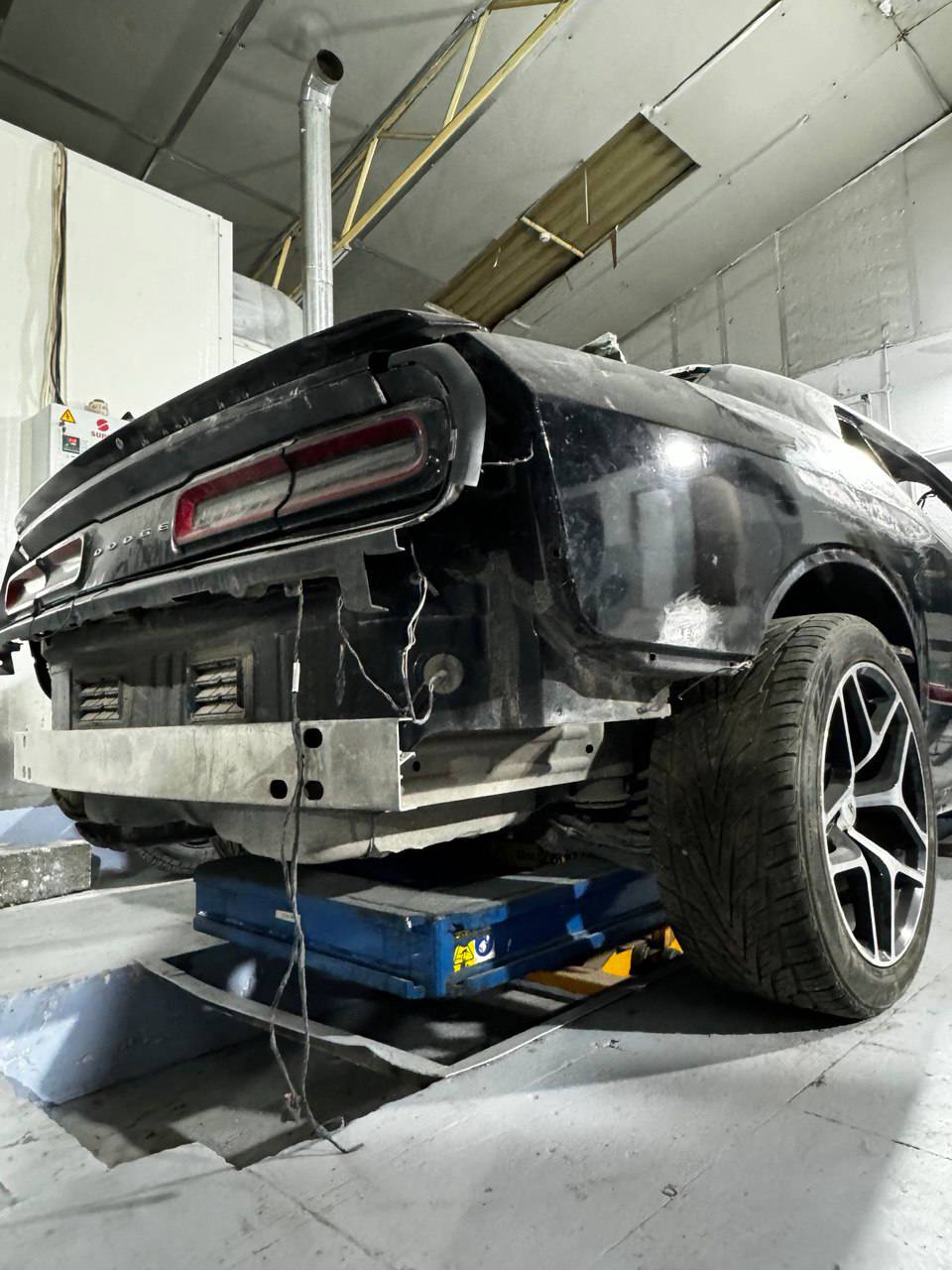
An example of a car’s chassis (frame) being measured and repaired on a specialized frame bench. The chassis is the vehicle’s structural foundation – if it’s bent or cracked, it can affect every aspect of the car’s safety and performance.
Common Signs of Chassis Damage After an Accident
How can you tell if your car’s chassis might be damaged? In many cases, the signs are subtle, but there are both visual clues and changes in how the car drives that can tip you off. After any accident – even a low-speed bump – it’s wise to look out for the following common signs of possible frame or chassis damage:
- Visible Bends or Deformations: Inspect the car’s body and undercarriage for any obvious structural damage. This could include dents, buckling, or crumpled metal on the frame rails or inner fenders. For example, after a side impact you might notice one side of the car’s frame is visibly bent or the vehicle sits slightly lower on one corner. Any part of the chassis that looks twisted or out of shape is a clear red flag. Even a small kink in a beam or crossmember warrants attention, as modern frames are designed to crumple in certain spots. Don’t ignore subtle visual damage – if something looks off, it could indicate deeper issues.
- Misaligned Body Panels or Doors: A bent chassis can throw off the alignment of exterior panels. Check the gaps around your doors, hood, and trunk – are they wider on one side or no longer even? Inconsistent panel gaps or doors that don’t close properly or stick can hint that the frame is distorted. For instance, you might suddenly have trouble closing a door fully, or notice wind noise and water leaks at door seals because the opening is slightly warped. If the trunk or hood no longer lines up when shut, that’s a sign the underlying structure might have shifted. These alignment problems often mean the chassis absorbed impact and moved ever so slightly out of square.
- Vehicle Pulls or Drifts to One Side: While driving, does your car pull to the left or right as if the alignment is off? A misaligned chassis can cause your wheels to point in different directions, leading the vehicle to drift instead of tracking straight. If you find you need constant minor steering corrections to go straight, or the steering wheel is off-center after the accident, it could indicate frame damage affecting the suspension geometry. Importantly, if the car still pulls even after getting a wheel alignment, then the issue might be a bent frame rather than just wheel alignment. In severe cases, someone following behind you might notice your car “crab-walking” – appearing slightly sideways as it moves forward because the front and rear axles are no longer perfectly parallel. This diagonal tracking is a telltale sign of a shifted frame.
- Uneven or Rapid Tire Wear: After some driving post-accident, take a look at your tire tread wear patterns. Strange or uneven tire wear (e.g. one side of a tire balding or wearing out faster than the other) can signal a bent chassis or suspension misalignment. A warped frame can prevent the wheels from aligning correctly on the road, causing certain tires to scrape or drag more. For example, you might see excessive wear on the inner edge of one front tire while the opposite tire looks fine. This happens because the wheel alignment angles (camber, toe) are off due to the frame shift. Uneven tire wear from chassis damage won’t be fixed by simply rotating or replacing the tires – the underlying alignment issue needs correcting. So if your tires start looking abnormal in the weeks after a crash, it’s a good clue that something in the structure is bent.
- Unusual Noises or Vibrations: Pay attention to any new creaking, rattling, or squeaking sounds especially when going over bumps or turning. These noises could be metal or components rubbing in ways they didn’t before, possibly due to a shifted frame or loosened mounting points. A mild collision might have caused parts of the chassis or body to slightly separate at joints, producing rattles. Likewise, vibrations in the steering wheel or floor at certain speeds can hint at frame problems. For instance, a bent frame could throw the drivetrain or suspension angles off balance, leading to shudders or shakes as you drive at highway speeds. Don’t dismiss these new noises or vibrations as just “aging” – if they started after an accident, they could be related to structural damage.
- Poor Handling or Stability: If your car just doesn’t feel right in turns or during sudden maneuvers after the accident, chassis damage might be to blame. A warped frame can affect suspension alignment and weight distribution, resulting in the vehicle feeling unstable, swaying more, or responding sluggishly to steering. You might notice more body roll on curves, or that the car feels skittish and not as planted on the road as before. In bad weather or emergency swerves, this reduced stability can become dangerous. Of course, handling issues could also come from damaged suspension parts, but often those go hand-in-hand with frame issues. If the ride quality is suddenly harsher or noisier, with the suspension seeming off-kilter, it’s a sign to investigate further.
Keep in mind that some of these signs may be subtle, and you might not notice them immediately. It could take days or weeks of driving for uneven tire wear to show up or for you to realize the car is pulling to one side. That’s why it’s important to stay observant after an accident. Even a minor accident can cause frame damage that isn’t obvious at first glance. If you detect any of the above symptoms – or if something just feels off – it’s wise to have the chassis inspected. Early detection can prevent small issues from escalating into bigger (and more expensive) problems.
Tips for Visual Chassis Inspection at Home
While a full diagnosis of chassis damage often requires professional equipment, you can perform a basic visual and functional inspection at home. Here are some steps and tips to help you check for obvious signs of chassis or frame damage after an accident:
- Park on Level Ground and Use Good Lighting: Find a flat, level spot to park your car and ensure you have plenty of light (daylight or a strong flashlight). A level surface lets you better assess if the car is sitting evenly. Step back and view your car from different angles. Does it appear level, or is one corner sagging? A bent chassis or suspension component might make one side of the car sit lower. Also look head-on: do the front wheels point straight and align with the rear wheels, or is something skewed?
- Walk Around and Inspect Body Gaps: Do a slow walk-around of the vehicle. Check the spacing and alignment of body panels – the gaps between doors, fenders, hood, and trunk. Are those gaps uniform on both sides? If you notice a door gap that is wider at the top than the bottom, or a trunk lid that looks offset, that could indicate structural distortion. Try opening and closing all doors, the hood, and trunk. If any door or the hood doesn’t latch smoothly or sticks, take note. This home test can reveal misalignments early. Minor rubbing or sticking now could signal a frame that’s just a bit out of square.
- Look Underneath the Car (Safely): If you can do so safely, get low to the ground and peer under the chassis. Using a flashlight, inspect the frame rails, crossmembers, and floor pan for any visible bends, cracks, or areas where the metal is crumpled. Pay special attention to the sections near where the impact occurred, if applicable. You might spot fresh damage or stress marks – for example, paint flaking off or metal that’s been pushed in an unusual way. You can also look for components that are out of place: perhaps a bracket is now crooked, an exhaust hanger torn off, or the suspension on one side looks shifted. Even without a lift, carefully sliding under the car near the damaged area to inspect the frame can reveal signs of trouble. (Important: Only do this if the car is stable and off, and never crawl fully under a car supported only by a jack!)
- Check the Suspension and Wheels: While looking under, glance at the suspension arms and wheel alignment. Does anything like a control arm or strut look bent? Are the wheels pointing the same direction or is one slightly turned out? You can use a straight object or just your eye to see if the left and right wheels seem aligned parallel. Also ensure the wheels sit properly in the wheel arches – a hard hit might push one wheel slightly backward or inward. If you notice one front wheel is closer to the bumper than the other, something is likely bent. After inspecting, move the steering wheel a bit (with the engine off) and listen for clunking noises from the steering linkage that weren’t there before, as these could result from frame distortion affecting the steering rack placement.
- Test Drive for Alignment and Feel: If the car is driveable, do a cautious test drive in a safe, open area. Pay attention to how the car tracks. Does it pull to one side if you loosen your grip on the steering wheel? Is the steering wheel now off-center when driving straight? Those are classic clues of alignment issues potentially caused by frame damage. Also feel for any vibrations through the steering wheel or chassis and listen for new noises while driving (such as rattles, creaks, or grinding). A light, constant vibration after a crash could mean something in the driveline or frame is out of balance. Note any difficulty in steering or if the car feels unstable making turns, as that could reflect chassis-related handling problems.
- Observe Tire Wear (Over Time): Immediately after an accident, your tires will likely look the same. But make a mental note (or mark) of your tire tread. After you’ve driven a few hundred kilometers or over the next several weeks, re-check your tire tread wear pattern. If you start seeing one tire wear down faster on the inner or outer edge, or one wheel’s tire wears faster than the others, it could be due to misalignment from a bent frame. Uneven tire wear is something you might not catch on day one, but it’s a valuable clue. If possible, also have your wheel alignment checked at a shop – if the technician cannot get the alignment within spec, that’s a strong indicator the chassis might be distorted.
By following these at-home inspection tips, you can catch many obvious signs of chassis damage. This process can help you decide if professional attention is needed. However, remember that not all frame damage is visible to an untrained eye. It’s certainly possible to have structural damage with no clear exterior clues. So use these tips as an initial screening – they’ll help you be informed when talking to a mechanic, but they don’t replace a thorough professional inspection if you suspect something is wrong.
Why Even Minor Chassis Damage Can Be Serious
It’s tempting to breathe a sigh of relief if your car looks okay after a minor accident. But be cautious – even minor chassis damage can be serious and shouldn’t be ignored. Modern vehicles are built with very tight tolerances, and a small bend in the wrong place can have ripple effects on the car’s safety and drivability.
For one, the chassis is integral to how your car handles another collision. A weakened or slightly bent frame offers less protection in the event of a future crash, because it may not channel impact forces as designed. The crumple zones that worked once might not work the same way again if they’re already crumpled or misaligned. In practical terms, a car with an unnoticed frame tweak might not protect you as well if you get hit again.
Additionally, what seems like “minor” damage often means something is out of alignment. Even a few millimeters of frame shift can throw off your wheel alignment and suspension geometry. Your car might still be drivable, but it could be slightly “off” in its alignment, causing constant stress on components. For example, a bent frame could shift the steering and suspension just enough that tie rods, ball joints, or wheel bearings wear out faster on one side. You might not notice that stress immediately, but over months you’ll find yourself needing new tires or repairs more often. Small frame issues can snowball over time, spreading wear and tear to other parts of the vehicle.
Another reason not to dismiss minor chassis damage is the effect on vehicle stability. A car with a slightly twisted chassis may have a different weight distribution or flex in ways it shouldn’t, making emergency handling less predictable. As mentioned, you could experience subtle but dangerous traits like the car pulling (“crabbing”) down the road or a less responsive feel in evasive maneuvers. These issues tend to become more pronounced at higher speeds or under strain, which is exactly when you need your car to behave properly for safety.
Lastly, even if you plan to keep driving the car, addressing frame damage sooner is better. It’s not just about safety; it also saves money in the long run. Left unchecked, a minor misalignment can lead to expensive fixes later – think chronic tire replacements, suspension fixes, or even more serious structural failures. Fixing a small chassis issue now (by straightening or reinforcing) is often easier and cheaper than waiting until it causes secondary damage. The bottom line: treat the chassis as the critical safety component it is, and don’t underestimate a slight bend or misalignment. If in doubt, have it evaluated by a professional to understand the true extent of the damage.
When to Seek a Professional Chassis Inspection
After performing basic checks, you might still be unsure about your chassis condition – or perhaps you did find some concerning signs. When should you go to a professional for a thorough chassis inspection? In general, if the accident was more than a trivial bump, or if you noticed any of the warning signs above (like persistent pulling, odd noises, visible structural damage, etc.), it’s wise to get a professional opinion. A trained mechanic or auto body specialist can assess areas that are hard to see and verify if your vehicle’s frame is bent, cracked, or otherwise compromised.
Professional chassis inspections often involve computerized measurement systems that far exceed what the naked eye can detect. For example, many advanced body shops use laser-guided or electronic measuring rigs (such as the Car-O-Liner frame measurement system) to check the chassis against the manufacturer’s specifications. These systems can detect misalignments with millimeter-level precision. In the UAE and other regions, specialized Computerized Chassis Measurement (CCM) tests are available, where RTA-certified machines generate a detailed report on your vehicle’s structural condition. Such high-tech inspections can reveal hidden damage like hairline cracks or slight shifts in the frame that you would likely miss on your own.
A certified technician uses a computerized chassis measuring system to inspect a vehicle’s frame on a lift. Professional inspections employ laser measurements and specialized tools to pinpoint structural damage with high precision, ensuring no misalignment goes unnoticed.
You should seek a professional inspection promptly if you observe multiple signs of possible frame damage, or if something just doesn’t feel right in your car’s handling. Also, if your vehicle took a strong hit to the front, rear, or side, it’s better not to gamble – have the frame checked even if everything seems fine. Experts can measure the frame dimensions and compare them to factory specs, identifying even the slightest deviation. This process might involve placing the car on a frame alignment machine, clamping it in place, and using sensors or laser targets at key points of the chassis. The result is a precise map of any bends or misalignment.
Another case for professional inspection is if you plan to continue driving the car extensively or sell it. Knowing the exact state of the chassis is important for peace of mind and value preservation. In fact, if you ever sell the car, buyers or dealerships may inspect the frame – it’s best to discover issues yourself first and address them. Moreover, modern vehicles have advanced driver-assistance systems (ADAS) (like lane-keeping aids, adaptive cruise control, automatic braking). These systems rely on a straight and calibrated frame to function correctly. If the chassis is off-kilter, sensors and cameras might be misaligned, potentially compromising those safety features. A professional will ensure the frame is straight and all systems can be recalibrated properly.
In summary, don’t hesitate to seek a professional chassis inspection after an accident, especially if you suspect damage. It’s a relatively small investment of time and money that can confirm your car is safe – or alert you to issues that need repair. The sooner you catch frame damage, the easier it often is to fix. Driving with unknown structural damage isn’t worth the risk, so get an expert to give you a clear diagnosis when in doubt.
How Chassis Damage Affects Safety, Alignment, and Value
Chassis damage isn’t just an abstract problem – it has real, tangible effects on your car’s safety, performance, and even its financial value. Here are the key areas impacted when a vehicle’s frame is bent or damaged:
- Road Safety: A damaged chassis can compromise your car’s ability to protect you in an accident. The frame is part of the vehicle’s safety architecture – if it’s weakened, crumple zones may not work correctly and collision forces might not be diverted away from you as intended. In practical terms, this means a second collision could result in more injury or damage than it would if the frame were intact. Also, a bent frame can affect the timing and effectiveness of airbags (since sensors and structural reference points might be mispositioned). Overall, your vehicle’s crashworthiness drops with frame damage, so it’s crucial to restore structural integrity for maximum safety.
- Wheel Alignment and Tire Wear: The chassis is the reference upon which wheel alignment is set. If the chassis is bent, your wheel alignment will likely be off, leading to the car pulling to one side and the steering being off-center. Misalignment due to frame damage causes uneven tire wear – you might go through tires much faster on one side of the car or notice unusual wear patterns (like one edge of the tire bald while the other has tread). This isn’t just a cost issue; poor alignment means less grip on the road and longer stopping distances. In extreme cases, it can even lead to tire blowouts if a tire is under abnormal stress. Proper alignment is critical for safe driving, and you simply can’t achieve correct alignment if the underlying frame is out of spec. Until the chassis is fixed, you’ll be fighting an uphill battle with your car’s alignment and tire health.
- Handling and Suspension Health: A bent chassis often means the car’s suspension mounting points are shifted. This results in poorer handling, like excessive body roll, instability in turns, or vibration at speed. You may find the car doesn’t respond as predictably to steering inputs, which can be especially hazardous in emergency maneuvers or bad weather. Additionally, the suspension components (shocks, struts, control arms) can suffer because they’re forced to operate at the wrong angles or under uneven loads. Important parts can wear out faster or even fail due to the extra strain from a misaligned frame. For example, a misalignment might put constant stress on a ball joint or bushing, leading it to loosen or break. Over time, this means more repairs. Also, as mentioned, modern electronic stability control and driver assistance features depend on a properly aligned chassis – if the frame is skewed, these systems may not function correctly, reducing your car’s overall safety net. In short, chassis damage can degrade your vehicle’s whole driving dynamics, making it less safe and less enjoyable to drive.
- Resale Value: From a financial perspective, frame damage can significantly reduce your car’s resale or trade-in value. Buyers are understandably hesitant about cars that have had structural repairs, since it’s seen as a major accident indicator. If the damage is unrepaired, many buyers or dealers will outright refuse the car or only offer a salvage value. Even if repaired, the fact that the chassis was damaged and straightened will typically be noted in vehicle history reports or during inspections, and it can lower the price someone is willing to pay. The reasoning is that a car with a history of frame damage might never be quite the same as before, and future problems could arise. Therefore, maintaining your chassis in good condition (or properly repairing it if damaged) is important not just for safety, but to preserve the value of your vehicle. Think of it this way: fixing frame damage promptly and correctly can pay off if you decide to sell later, as it keeps your car in the market for buyers who demand a structurally sound vehicle.
In all these ways, the condition of your chassis has far-reaching effects. It’s not “just a cosmetic” or minor concern – it touches the core safety and mechanics of the car. This is why insurance companies often declare a car a total loss if the frame damage is too severe or costly to fix, and why any reputable inspection includes checking the chassis. For you as an owner, understanding these impacts highlights why you shouldn’t ignore chassis damage. It affects how safe your car is to drive, how well it drives, and what it’s worth.
Stay Informed and Stay Safe
Discovering or suspecting chassis damage after an accident can be unsettling, but knowing what to look for is half the battle. By understanding the role of the chassis and checking for common signs of damage, you’ve empowered yourself to make informed decisions about your vehicle’s health. Remember, your car’s chassis is its foundation – keeping it sound is crucial for your safety on the road. If you’ve gone through the visual inspections and still have doubts, or you’ve noticed any warning signs we discussed, consider getting a professional chassis evaluation. Modern diagnostic tools can catch issues our eyes can’t see, giving you clarity and peace of mind.
Above all, don’t let the reassuring appearance of an undented bumper lull you into a false sense of security. Even minor accidents can hide structural damage, so it’s always better to be cautious. Addressing chassis problems early will save you from bigger headaches later and ensure your car remains safe to drive. When in doubt, have a trusted mechanic or collision repair specialist take a look – it’s not being paranoid, it’s being proactive about your safety and your vehicle’s longevity.
In the end, an accident is an unwelcome event, but it can also be a reminder of how important vehicle integrity is. By checking your chassis and fixing any issues, you’re not only protecting your investment but also taking care of everyone who rides in your car. Stay informed, stay alert to how your car behaves after a collision, and you’ll be well on your way to keeping your ride roadworthy and safe. Safe driving!
Co-owner of Swedish Experts — dedicated to precision, safety, and excellence in chassis repair.
Off-duty — passionate cyclist and carp fishing enthusiast. Believes success in both business and hobbies requires strategy and patience.