
Many used cars imported from the United States into the UAE arrive with hidden histories. The allure of a low price can mask the fact that most American imports were previously damaged – often written off by insurance due to accidents or floods, then cheaply repaired and shipped overseas. These vehicles are typically “salvage title” cars that could not be legally driven in the US without extensive repairs, so sellers fix them just enough to look presentable for resale abroad. Unfortunately, superficial fixes can leave dangerous problems lurking beneath the shiny paint. UAE buyers – from private enthusiasts to B2B dealers – need to beware of these hidden issues, as they can lead to failed RTA inspections, costly repairs, or serious safety hazards on UAE roads. Below we explore the top five hidden damages commonly found in U.S. imported cars, why each is dangerous (especially in the UAE), and how to spot them before you buy.
What it is: Flood damage occurs when a vehicle has been partially or fully submerged in water (for example, during hurricanes or flash floods). Thousands of U.S. cars get flood-damaged each year and are later sold at auction. Importers may bring these “waterlogged” cars into the UAE, often without disclosing the prior water damage. On the surface the car might look normal after cleaning, but internally it’s a different story.
Why it’s dangerous/costly: A flood-damaged car can be a ticking time bomb of mechanical and electrical failures. Water infiltrates the engine, transmission, and electronic components. Corrosion spreads through wiring and control modules, leading to random electrical glitches or complete failure of critical systems (engine control, ABS, etc.). Vital safety devices like airbags or brake systems may malfunction due to corroded sensors. In one UAE case, a buyer unknowingly purchased a flood-import and had to replace the entire engine for 14,000 AED, only to continue experiencing transmission jerking and electrical issues. The entire electrical system can rot and fail at any moment in such cars. For this reason, UAE regulators officially ban the import and registration of severely water-damaged (flooded) vehicles – they are considered not roadworthy. If a flood car’s history is discovered, it cannot pass RTA inspection or be registered under UAE rules. Even if it slips through initial registration, driving a structurally unsafe, flood-compromised car can result in legal penalties (heavy fines, black points, even impoundment) if discovered.
How to detect or prevent it: Flood damage is often not visible in photos, so you must investigate deeper. Here are some tips to uncover it:
Remember, flood damage can be deadly. A car that seems fine today might shut down on a highway tomorrow when a corroded wire finally snaps. If there’s any doubt, walk away – or insist on a professional inspection report proving the vehicle is dry and sound.
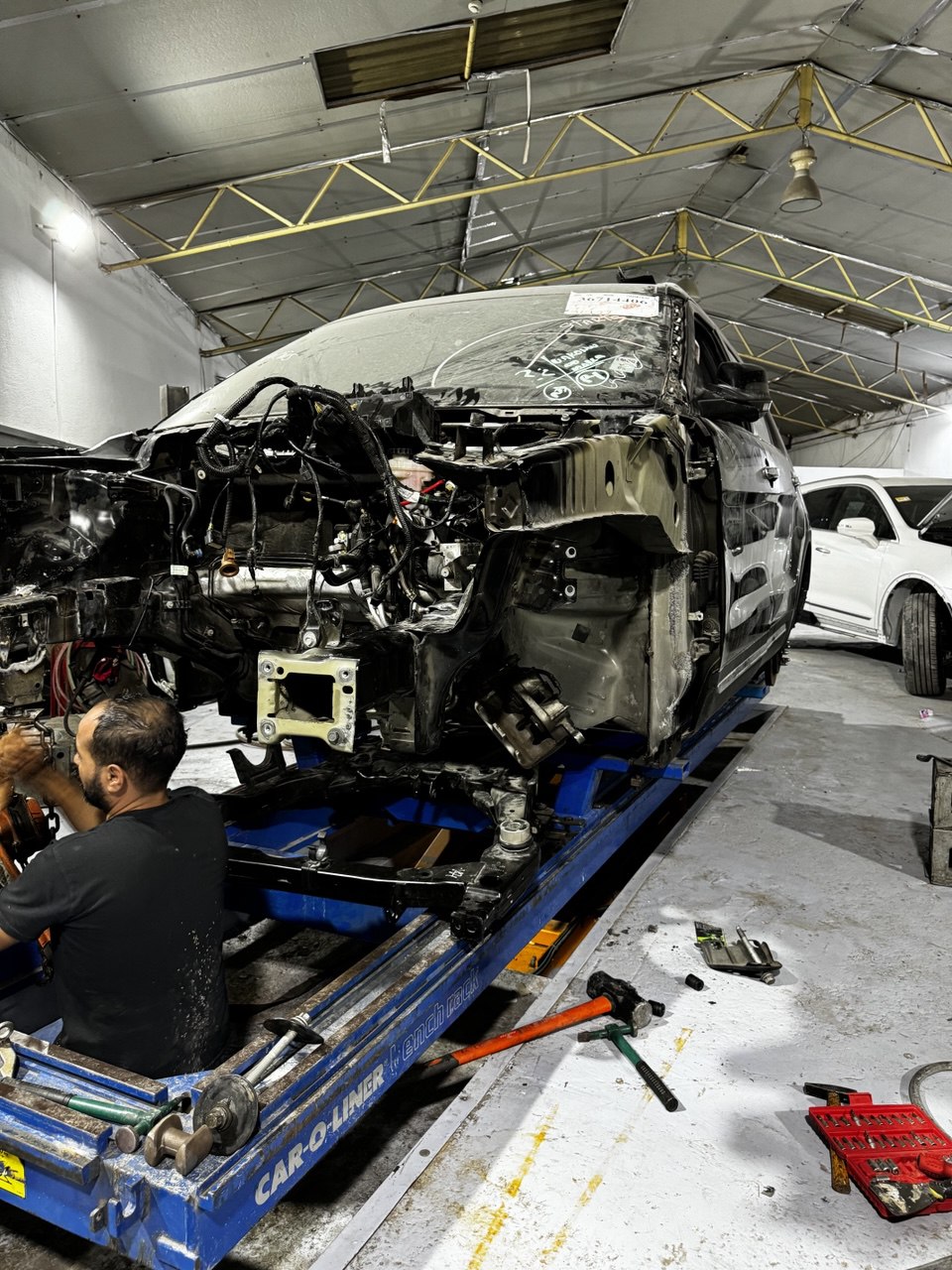
What it is: The chassis or frame is the car’s skeleton. A severe accident can bend the frame rails or unibody structure out of shape. Many U.S. salvage cars have had major collision damage that left the chassis misaligned. Unscrupulous rebuilders might straighten the frame just enough so the car drives, but not restore it to factory specifications. The damage may be hidden under new body panels or paint, while the underlying frame geometry is still distorted.
Why it’s dangerous/costly: A bent chassis undermines the vehicle’s fundamental safety and handling. Even a slight misalignment means the car won’t track straight or handle predictably. It may “crab walk” or pull to one side. On the UAE’s highways, a structurally crooked car is at higher risk of losing stability at high speeds or during emergency maneuvers. Tire wear will be uneven and rapid if the wheels don’t sit correctly, and suspension components can be strained. Moreover, the next collision could be catastrophic – a weak or bent frame cannot absorb impact as designed, putting occupants at extreme risk. The RTA in Dubai checks chassis alignment on suspect vehicles using computerized measurement systems. If the distances between key chassis points aren’t within manufacturer tolerances, the car will fail the inspection. In fact, Dubai’s RTA relies on the advanced Car-O-Liner Computerized Chassis Measurement (CCM) system for official tests. Any car with uncorrected frame damage will not get registration approval until it’s properly repaired and passes a certified CCM report. Driving such a car on the road is not only unsafe, it’s technically illegal to register; authorities can consider it unroadworthy (leading to fines or impound) if discovered.
How to detect or address it: Frame damage isn’t always apparent without inspection, but there are warning signs:
In short, never assume a used import’s frame is fine just because the car looks shiny. A slightly bent chassis can turn into a big headache of poor driving dynamics, constant alignment issues, failed inspections, and huge repair bills to set it right. Always verify the “skeleton” is straight – your safety depends on it.
What it is: This refers to problems with the vehicle’s passive safety systems – the airbags, seatbelt pretensioners, and associated sensors/modules (collectively called the SRS). Many imported U.S. cars have been in serious accidents where the airbags deployed. Replacing multiple airbags and SRS components is very expensive, so some shady rebuilders do not install new airbags or modules. Instead, they may stuff a dummy cover where the airbag was or reconnect a blown seatbelt without replacing the pretensioner. To hide this, they use tricks like adding a resistor to the SRS circuit to fool the airbag warning light. The car’s dashboard will then show no airbag fault, even though the system is non-functional. This is a hidden and extremely dangerous deception – the buyer thinks the car’s airbags are intact, when in reality they might be missing or inoperative.
Why it’s dangerous/costly: The danger here is obvious: in a crash, the airbags may fail to deploy. You and your family could be left with zero protection in a high-speed collision. There have been horror stories – for example, an imported car in the UAE had its airbags deployed in the US, but the seller simply reset the light and sold it. The new owner got into a serious accident and “take a guess what happened – the airbags didn’t deploy”. This kind of fraud can literally be the difference between life and death. Even if you don’t crash, driving without functional airbags is illegal and will fail inspection. During annual tests, any airbag warning light on the dash is an immediate failure in the UAE. But if the light has been tampered with (bulb removed or resistor hack), the car might pass initial inspection, leaving the unsuspecting owner at great risk. Additionally, fixing SRS systems after purchase can be very costly – you might have to buy multiple airbags, a new control module, new seatbelts, and reprogramming, which can run into thousands of dirhams. In some cases, insurers may also refuse coverage if they discover safety systems were compromised. Overall, a car with faulty airbags is not roadworthy and puts you in violation of UAE traffic safety laws (driving an unsafe vehicle).
How to detect or prevent it: Spotting airbag system faults requires vigilance:
Bottom line: Make sure the car’s “hidden” safety systems are actually there for you. Airbags and seatbelt pretensioners save lives, but only if they’re intact and functional. Don’t become another cautionary tale. If you have any doubts about an imported car’s airbag system, walk away or get it fully checked. It’s not just about passing RTA tests – it’s about protecting you and your passengers in an accident.
What it is: Rust is the silent killer of cars. In the UAE’s desert climate, locally owned vehicles rarely suffer serious rust – but imported cars from the US often do, especially if they came from regions with heavy snow, road salt, or high humidity. Older cars or those that were near coastlines can also accumulate rust. Additionally, any car that was in a flood (as discussed) will start corroding in all the nooks and crannies. Rust might not be visible in listing photos because sellers can spray on undercoating or touch up paint to hide it. However, underneath that cosmetic cover-up, the metal may be flaking and weakening. Common areas for hidden rust include the chassis rails, floor pans, suspension mounting points, and door sills.
Why it’s dangerous/costly: Structural rust is more than just an cosmetic issue – it eats away the very structure of the car. If the main frame rails or pillars become thin from corrosion, the vehicle’s ability to withstand an impact is drastically reduced. Imagine the difference between crashing in a solid steel cage versus a cage full of holes – that’s the risk with severe rust. The Roads & Transport Authority considers any significant structural rust a safety hazard. In fact, presence of rust holes or thinning metal on the chassis is grounds for inspection failure in the UAE. Inspectors will fail a car that has advanced rust on critical parts like the frame, suspension mounts, or door pillars, because it means the car may collapse or snap under stress. Even moderate rust can lead to costly headaches: rusted bolts and joints are hard to service, rust in the fuel or brake lines can cause leaks (extremely dangerous), and once rust starts, it tends to spread if not properly treated. In the UAE, repairing serious rust is difficult – it often requires cutting out sections of metal and welding in patches, which is time-consuming and expensive. Moreover, if the rust is too extensive (for example, a car from the American “rust belt” with a rotted undercarriage), it might be beyond economical repair. Remember that UAE authorities explicitly ban the import of cars that are “scrapped” – which includes those with severe rust damage. If you unknowingly buy a rust bucket, you could be stuck with a car that can’t legally pass inspection without extensive restoration.
How to detect or address it: Rust can hide, but a thorough check can uncover it:
In summary, don’t underestimate rust just because our climate is dry. The car may not have formed rust here, but if it imported rust with it, you’ll be dealing with the consequences. The UAE’s heat and occasional coastal humidity can even accelerate existing corrosion. If you see major rust or evidence of cover-ups (fresh undercoat, etc.), think twice. The car might not just cost you in repairs – it might not even pass inspection until all that rust is cut out and fixed.
What it is: This refers to bad-quality repairs done to fix accident damage. While bent chassis and airbags (covered above) are specific issues, here we mean any shoddy repair work on the body or frame that isn’t immediately obvious. Examples include: cut-and-weld jobs where two half cars are spliced together, poorly welded chassis sections, body panels filled with excessive body filler (bondo) instead of properly reshaping or replacing, and misaligned parts just “adjusted” to fit. Many salvage imports were repaired on a tight budget – the rebuilders often use subpar parts and minimal effort to maximize profit. They might, for instance, weld a crumpled frame section back together out of alignment, skip installing internal reinforcements or crumple zones, or use parts from different cars that don’t perfectly fit. The car may look shiny after a paint job, but underneath that paint could be a horror show of hack repairs. These are hidden damages because you won’t see them until you really examine the car closely (or strip it down).
Why it’s dangerous/costly: Poor structural repairs directly affect safety. If a car had its front end rebuilt without restoring the crumple zones, the next collision could be devastating – the car won’t absorb impact properly. One experienced owner warned that on such improperly repaired cars, “there are no crumple zones anymore” after the fix. Imagine all the force of a crash transferring straight to the cabin – a terrifying thought. Furthermore, badly welded seams can crack over time, causing the car to literally split or deform with normal usage. Even short of an accident, improper repairs can lead to endless problems: water leaks (from misaligned panels or bad welds), doors that don’t close right, suspension geometry off, etc. From a regulatory standpoint, any evidence of major structural repair that wasn’t certified can fail inspection. The RTA requires that chassis repairs be done to standard; a car with obvious cut-weld fixes might need a special inspection (CCM report) to be approved. In one documented case, a vehicle failed the registration test because the front left chassis had been repaired without RTA authorization. Economically, if you buy a car with hidden structural issues, you may end up sinking a lot of money to re-repair things correctly – or worse, find the car is irreparable. Such a car also has very low resale value (educated buyers or dealers will avoid it or offer pennies).
How to detect or avoid it: Catching poor repairs requires a keen eye and sometimes special tools:
If you do discover evidence of poor repairs, walk away unless you are prepared to undertake potentially extensive re-repairs. It’s not just about passing the RTA test – it’s about your life on the line if that car’s structure doesn’t hold up in a crash. Always remember the adage in used car buying: “face value means nothing”. You must dig deeper to know what you’re truly getting.
Hidden damages in imported U.S. cars can be costly at best and life-threatening at worst. The UAE government and auto experts continually urge buyers to get pre-purchase inspections on used cars, especially imports. In the UAE, there are service centers that, for around AED 150–300, will perform a comprehensive 120-point check that uncovers flood residue, frame alignment, airbag system status, and prior repairs. This is money well spent for peace of mind. As one veteran car enthusiast put it, “If you do not know how to find faults in a used car, a PPI (pre-purchase inspection) by a decent garage is a must – be it US or GCC spec”.
When considering an American import, don’t let a shiny exterior or low price blind you to potential hidden damages. Ask the hard questions: Why was this car exported? Is there documentation of repairs? Insist on seeing auction reports or U.S. history reports. Be wary of any seller who discourages inspections. If they have nothing to hide, they should welcome an independent check.
Finally, leverage the expertise of professionals. Swedish Experts in the UAE, for example, offers specialized pre-purchase inspections and uses advanced tools like Car-O-Liner chassis measurement to detect frame issues that aren’t visible to the naked eye. They can also perform computer diagnostics to sniff out electronic and airbag faults, and thoroughly check for signs of flood or poor repairs. Utilizing such services can save you from a world of trouble down the line. After all, failing to uncover a hidden damage before purchase means it becomes your problem afterward – and some problems can’t be easily fixed or may render the car unusable.
In summary, the top 5 hidden issues in U.S. imports are flood damage, frame damage, SRS (airbag) faults, rust, and bad repairs – each with serious implications in the UAE context. Stay vigilant about these when shopping. With due diligence and professional help, you can enjoy the bargain of an imported car without the nasty surprises. Safe driving!

Co-owner of Swedish Experts — dedicated to precision, safety, and excellence in chassis repair.
Off-duty — passionate cyclist and carp fishing enthusiast. Believes success in both business and hobbies requires strategy and patience.