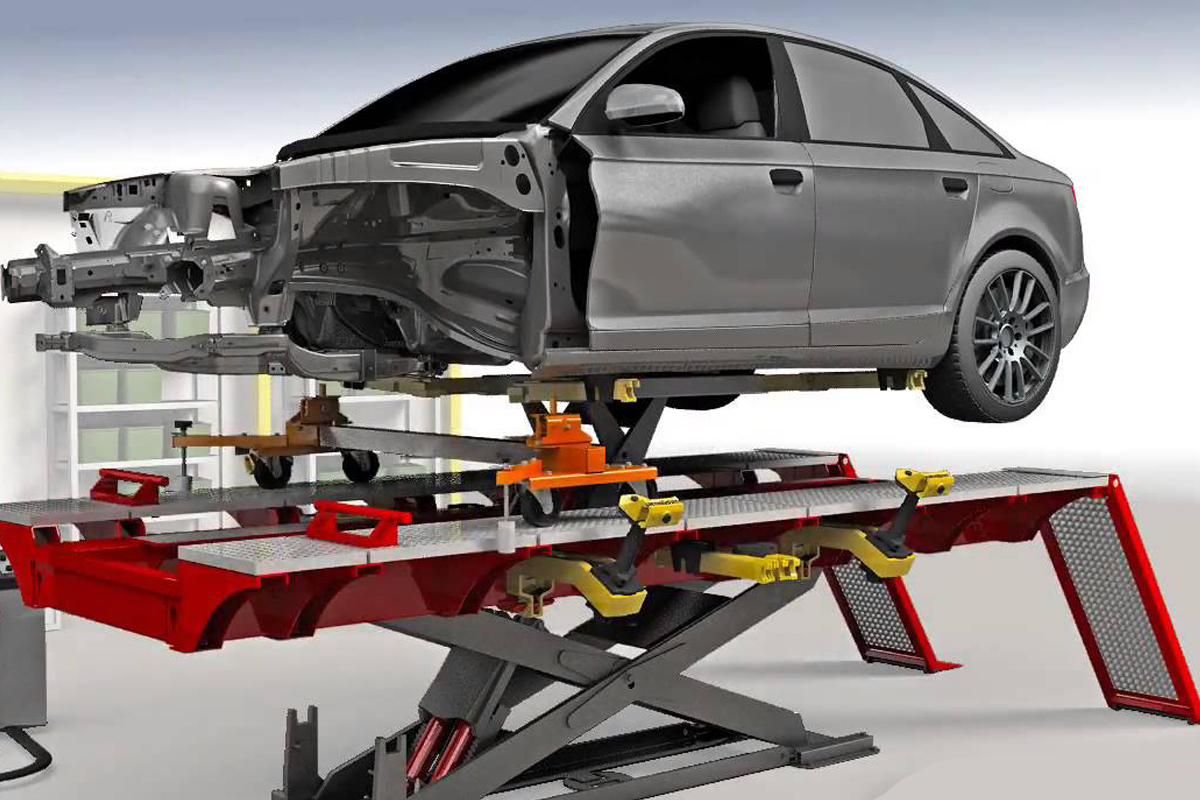
The chassis, also known as the vehicle’s frame, is the main structural backbone of a car. It is comparable to a skeleton in a human body – all other components (engine, drivetrain, suspension, body panels, etc.) attach to this frame. In modern vehicles, the chassis can take the form of a unified body-shell (unibody) or a separate frame (as in trucks and older designs), but in all cases its function is to support the vehicle’s weight and maintain structural integrity. Crucially, the chassis is designed to absorb and distribute forces during impacts, protecting passengers by preserving the car’s shape and crumple zones. Without a robust chassis, the vehicle’s ability to protect occupants in an accident is significantly compromised. In other words, if the chassis is weakened or bent, even a minor accident can become a major safety hazard. A compromised frame affects everything from handling to crash safety, making timely repairs and inspections essential.
Because the chassis is so fundamental to a vehicle’s safety and performance, ensuring its integrity is paramount. This is where chassis inspection comes in. A chassis inspection is a thorough check of the vehicle’s structural frame to detect any damage, deformities, or weaknesses. For UAE drivers – whether private car owners or fleet operators – understanding chassis inspection and its importance is critical. Beyond personal safety, UAE laws and regulations make chassis integrity a legal requirement for roadworthiness and vehicle registration. Below, we will explore what chassis inspection involves, how advanced digital measurement systems like CCM (Computerized Chassis Measurement) and Car-O-Liner work, real-world examples of frame damage, when you should get a chassis inspection, and the UAE-specific rules that govern this vital aspect of vehicle maintenance.
What Does a Chassis Inspection Involve?
Chassis inspection involves examining the vehicle’s frame for any signs of damage or misalignment and verifying that the chassis dimensions are within manufacturer specifications. Traditionally, a basic chassis inspection includes visual checks for cracks, bends, or rust on the frame rails and underbody, as well as measuring key reference points on the chassis to see if anything is out of alignment. Even minor dents or visible cracks in the chassis can indicate structural damage that needs attention. Inspectors also look for signs of previous improper repairs (like cut-and-weld sections) which can weaken the structure.
In modern practice, digital chassis measuring systems are used to perform highly accurate inspections. For example, many UAE workshops and testing centers use Computerized Chassis Measurement (CCM) devices such as the Car-O-Liner system. These systems use electronic sensors and 3D measuring technology to compare the vehicle’s chassis against factory specifications. The car is mounted on a specialized frame alignment bench, and targets or scanners are placed at defined points on the chassis. The system then detects any deviations in length, width, or diagonals of the chassis with millimeter precision. If any section of the frame is bent, twisted or shifted out of spec, the CCM report will flag it.
Technicians in the UAE using a computerized frame alignment system (Car-O-Liner) to inspect and measure a vehicle’s chassis.
Advanced digital measurement offers unrivaled precision – it can detect misalignments that are not visible to the naked eye, ensuring the vehicle’s frame is returned to factory dimensions if repairs are needed. In fact, Dubai’s Roads and Transport Authority (RTA) relies on the same Car-O-Liner computerized chassis measurement system for its official inspections, underlining the technology’s accuracy and credibility. An RTA-certified CCM inspection will produce a detailed report on the condition of the chassis, indicating whether the vehicle’s structural measurements are within acceptable tolerances. If the chassis is out of alignment, specialized frame-straightening equipment (often the very same Car-O-Liner benches) can be used by trained technicians to restore the chassis to spec. This is a delicate process – the chassis must be realigned gradually and without introducing excess heat or stress, so as to not weaken the metal. Once repairs are done, another CCM test is performed to verify the chassis is back within allowable limits.
In summary, a chassis inspection today is a high-tech procedure. It combines expert visual evaluation with computer-guided measurements. The result is an accurate assessment of whether your car’s “skeleton” is straight and sound. If it is, you gain peace of mind. If not, you’ll receive a report pinpointing the issues so they can be corrected. Many service centers in the UAE, such as Al Mutakamela in Dubai, advertise one-stop chassis inspection and repair services using RTA-approved CCM machines that produce accurate reports meeting RTA standards. After successful inspection, you may be issued a CCM certificate to show the chassis meets requirements – a document that can be important for registration or insurance (more on that later).
Common Types of Chassis Damage
Not all frame damage is the same. Automotive experts classify chassis deformities into several types based on how the frame is bent or distorted. Here are some real-world examples of chassis damage that can be identified through inspection:
- Side Sway (Lateral Misalignment): This occurs when the chassis is bent sideways, shifting the centerline of the vehicle to left or right. The frame might look like it’s been pushed into a slight parallelogram shape. Side-sway often results from a side-impact collision. It causes misalignment of suspension and drivetrain mounting points. Even a small lateral bend can make the car track improperly (dog-tracking) and put strain on components. On heavy vehicles, a side sway is seen as a lateral bend in the chassis that misaligns the centerline. Any noticeable sway will need frame straightening.
- Sag (Vertical Bending): Sagging means the frame bends downward in the middle (or front/rear), losing its horizontal straightness. In other words, the chassis “sags” out of a true horizontal plane. This often happens if a car takes a hard hit to the front or rear or if it’s been overloaded. A sag can be visible as uneven gaps around doors or a drooping bumper height. Sagging frames also tend to have stress damage on the lower flanges of the frame rails (the flanges are the load-bearing edges of a frame rail, and are critical for structural strength). Significant sag will affect ride height and suspension geometry.
- Twist: A twisted chassis means one corner of the vehicle is raised (or lowered) relative to the opposite corner, due to the frame being torsionally warped. For example, the front left and rear right corners might be higher than the other two corners. Twist often results from scenarios like hitting a curb or pothole extremely hard on one wheel, or an off-road mishap. The vehicle’s front end may roll to one side while the rear rolls to the opposite side. Twists are held in the chassis by crossmembers (support braces connecting left-right frame rails). A twisted frame can cause a car to lean to one side and dramatically affects alignment – you might notice the vehicle doesn’t sit level or pulls to one side. Untwisting requires applying force at the correct points (often using the heaviest crossmembers as leverage) to gently counter-rotate the frame back.
- Diamond Frame: “Diamond” damage describes a situation where the frame is skewed such that one wheelbase (distance between front and rear wheels on one side) is shorter than the other. Essentially, one frame rail has been pushed slightly forward relative to the other, giving the frame a diamond shape when viewed from above. This can happen in a head-on or rear collision that hits one side of the frame, or improper towing that pulls one frame rail. A car with diamond frame damage will crabwalk and possibly have one front wheel set farther back in the wheel well than the other. Diamond misalignment is particularly dangerous because it means the axles are no longer parallel – the car’s handling and tire wear will be severely affected. Fixing a diamond condition involves pulling the frame back into square.
- Cracks or Tears: Cracks in the chassis can develop from severe stress or as the result of metal fatigue. After an accident, even if the frame doesn’t look bent, you may find cracks at welds or at high-stress points (e.g. around suspension mounts or crumple zones). Over time, small cracks can propagate and weaken the structure. Any crack in a structural member is a serious safety concern, as it can grow and suddenly fail. A proper inspection will check typical crack-prone areas. For instance, the Car-O-Liner guidance notes that even minor bends or cracks in the frame are red flags that indicate structural damage needing professional repair. Cracks are often remedied by welding in reinforcement plates or replacing the affected section of the chassis – but such repairs must be done to a high standard to restore strength.
- Corrosion (Rust Damage): Though less common in the UAE’s dry climate, corrosion can still affect vehicles – especially older models or those that came from overseas climates. Rust eats away at the metal, and if it attacks the frame rails or crossmembers, it can significantly reduce the chassis’s load-bearing capability. Inspectors look for visible rust or corrosion on the chassis. The presence of significant rust holes or thinning metal is actually a reason for inspection failure, as the RTA considers any structural rust a safety hazard. In coastal areas of the UAE (or if a vehicle was imported from a country that uses road salt), chassis corrosion is something to be mindful of. Small surface rust spots can be treated, but if a frame has advanced rust (flaky metal, holes), sections may need to be cut out and re-welded – and the car may not pass inspection until that’s resolved.
Each of these damage types can severely compromise a vehicle’s safety. For example, a sway or diamond frame means the car will not drive straight, and its suspension and brakes won’t operate as intended. A twisted or sagging frame can mess up alignment to the point where tires wear unevenly and the car’s center of gravity shifts unpredictably. Cracks or rust can cause parts of the chassis to collapse under stress. This is why chassis inspections are so important after any major incident – they identify these issues so you can get them fixed before driving at high speeds or carrying passengers.
When is Chassis Inspection Necessary?
How do you know when you should get a chassis inspection? In general, any situation that could conceivably affect the integrity of the vehicle’s structure should prompt an inspection. Here are the key scenarios for when and why you’d need a chassis inspection:
- After an Accident or Collision: Any moderate to severe accident warrants a chassis check. Even if the damage looks cosmetic, the force of a crash can transmit through the body and bend the underlying frame. This is especially true for front or rear collisions that may “concertina” the chassis, or side impacts that jar the alignment. Under UAE regulations, if a vehicle has been in an accident and repaired, it must undergo a test to ensure roadworthiness before returning to the road. Often, drivers are surprised that a car “drives funny” after repairs – a post-accident chassis inspection can reveal issues that body shop repairs might have missed. It’s better to discover and straighten a slightly bent frame now than to experience a failure later at highway speeds.
- Before Vehicle Registration or Annual Testing: In the UAE, all vehicles (once they are over a few years old) must pass an annual technical inspection to renew registration. The inspection includes verifying the chassis condition and alignment. If the examiners notice any signs of chassis damage – for example, obvious repair welds, chassis number misalignment, or body panels that don’t line up – they will require a dedicated chassis inspection (CCM test) to certify the frame’s integrity. This often happens when someone goes for annual “passing” and the car has a history of an accident. The RTA (in Dubai) or the corresponding authority in other emirates will not approve the vehicle registration until a chassis report shows everything is within acceptable parameters. The CCM chassis test is an extra procedure (around AED 500 in Dubai, or ~475 AED at Abu Dhabi ADNOC centers) on top of the normal inspection fee. It’s certainly needed if the car was tagged as repaired from structural damage. In summary, any time you go for annual inspection with a previously damaged car, be prepared for a possible chassis measurement requirement. Also, if you’re registering a used car or transferring ownership, a thorough inspection (including chassis) is mandatory to ensure the car is roadworthy for the new owner.
- When Buying a Used Car (Pre-Purchase Inspections): If you’re considering a second-hand car, especially from a private seller, it’s wise to get a comprehensive inspection that includes checking the chassis. Many reputable workshops in the UAE offer pre-purchase inspection services, and they will put the car on a lift to look for any signs of frame damage or repairs. Hidden chassis damage is one of the biggest risks when buying used – a car might look shiny on the outside but could have a twisted or previously bent frame from an unreported accident. As a buyer, discovering such damage after purchase can be costly and dangerous. Therefore, investing in a chassis inspection report as part of due diligence can save you from inheriting someone else’s problem. In fact, UAE authorities offer a service (like Dubai’s RTA vehicle history report) to check if a car has ever failed a chassis test or been deemed a total loss. But even beyond paperwork, an independent chassis check gives peace of mind. If the inspection finds any structural issues, you can demand they be fixed or walk away from the deal. If the car passes with flying colors, you have confidence in its structural integrity.
- Fleet Maintenance and Commercial Vehicles: Fleet operators (e.g. taxi companies, delivery vehicles, corporate fleets) should incorporate chassis inspections into their maintenance schedules. Commercial and high-mileage vehicles can develop chassis issues over time due to cumulative stress (think of heavy loads or frequent off-road use). For instance, a delivery truck that constantly carries heavy cargo might start to sag or crack at stress points after years of service. Regular chassis inspections (perhaps every couple of years, or at certain mileage intervals) can catch these problems early. In the UAE, commercial vehicles are strictly inspected every year, and authorities may perform random road checks. A fleet vehicle with a compromised frame not only risks failing its test but also poses a liability on the roads. Proactively inspecting and repairing chassis problems keeps the fleet safe and minimizes downtime (an out-of-service vehicle awaiting major frame repairs can disrupt operations). Moreover, having documentation of periodic chassis inspections can be useful for fleet insurance and compliance audits.
In short, anytime structural integrity is in doubt or due for verification, a chassis inspection is needed. After accidents, before registration, during purchase/sale, or as part of heavy-use vehicle upkeep – these are all critical moments to “x-ray” the vehicle’s skeleton and make sure it’s sound.
UAE Laws and Regulations on Chassis Integrity
The United Arab Emirates has stringent laws to ensure that all vehicles on the road are structurally safe. Chassis integrity is not just a technical concern – it’s literally mandated by law as part of vehicle roadworthiness. Here are some key UAE regulations and their implications regarding chassis condition:
- Annual Vehicle Testing Requirements: As mentioned, all emirates in the UAE require vehicles to pass a technical inspection for registration. In Dubai, this is overseen by the RTA, while Abu Dhabi uses ADNOC testing centers (Vehicle Inspection Centers), and other emirates have their own authorized testing facilities. During these inspections, the chassis and chassis attachments are among the items scrutinized. The law is clear: if a vehicle fails the inspection, it is not allowed on public roads. “Failing this test means that the vehicle may not be taken out on the road” until it’s fixed and passes. A common cause of failure is indeed chassis-related. An RTA official once noted that accident-related issues to the chassis or its attachments (axles, suspension links, etc.) are among the top reasons that 1 in 5 cars fail testing. So, if your car has a bent or poorly repaired frame, expect a fail outcome.
- Procedure After a Failed Chassis Test: If an inspector suspects frame damage, you will be asked to get a CCM chassis inspection report. As described earlier, this is a detailed measurement check. In Dubai, the procedure (as shared by local motorists) is that you pay for the CCM test (approximately AED 500) at an approved center. If the car passes – meaning the chassis measurements are within acceptable limits – you can proceed with registration. If it fails, you are required to repair the chassis and then undergo a re-inspection (often at a reduced fee of ~AED 250 for the re-test within a set period). You cannot simply ignore a chassis fail – the vehicle will not be registered or allowed to legally drive until the issue is resolved. In fact, UAE law gives you a 30-day window to fix any issues after a failed test. If the test is not cleared within 30 days, the vehicle’s registration is not renewed and the owner incurs fines for each day the car remains unregistered. Driving a car with lapsed registration (due to failing inspection) is a traffic offense – police can stop the vehicle and issue fines or even impound it for being on the road without a valid registration. In essence, driving with a bent or unrepaired chassis is not only unsafe, it’s illegal because your car won’t have a valid registration until fixed.
- Emirate Variations: While Dubai’s RTA is often cited, other emirates enforce similar standards. Abu Dhabi’s inspection regime likewise requires that any structural damage be rectified. Abu Dhabi’s ADNOC Vehicle Inspection Centers explicitly include Chassis Computerized Measurement (CCM) as a service, with a published fee, indicating that they too check chassis alignment when needed. Sharjah, Ajman, and others use either their municipality centers or federal testing stations that follow the UAE unified vehicle standards. The bottom line is all UAE authorities require a sound chassis for a vehicle to be deemed roadworthy, whether you’re dealing with Dubai’s RTA or Sharjah’s Tasjeel or Abu Dhabi Police’s inspection. There might be slight differences (for example, Dubai might be quicker to request a CCM if any sign of damage, whereas in other emirates it could be triggered mostly for major repairs or re-registration of repaired vehicles), but ultimately a bent frame is a showstopper nationwide.
- Legal Consequences of Structural Issues: If you knowingly continue to drive a car with a bent chassis (and somehow avoid inspections), you are taking a huge risk. In the event of an accident, for example, if an investigation finds your vehicle was structurally unsound, you could be held liable for operating an unsafe vehicle. Moreover, insurance companies could refuse claims if the car was not roadworthy. In practice, though, most people will be caught at the inspection stage before it gets to that. It’s worth noting that selling a car with unresolved chassis damage carries legal responsibilities too. While it’s not outright illegal to sell a car that failed inspection, the law says you must disclose its condition and the car cannot be driven on the road by the new owner until it’s repaired and passes the test. If a seller misrepresents a vehicle with chassis damage as “fine” and sells it, they could face penalties or legal disputes later. Always be upfront about structural issues during a sale – and usually the transaction will be limited to scrap dealers or specialized buyers if the chassis isn’t fixed.
- Insurance and Total Loss Decisions: From an insurance perspective, a car with major chassis damage is often considered a “total loss.” UAE insurance policies (the unified policy wording) specify criteria for declaring a vehicle a total loss: one key criterion is if the vehicle’s chassis or structural pillars are so damaged that they require cutting, welding, or cannot be safely repaired. Even if theoretically repairable, if fixing the frame is extremely costly (usually if repair cost > 50% of the car’s value), the insurer will declare the car totaled. For instance, if your car’s frame was bent in an accident, the insurance company might opt to write it off as salvage rather than risk an inadequate repair. This has a few implications: the car would then carry a record of structural damage, and if it’s ever put back on the road, it typically must undergo a rigorous inspection and re-registration process. Additionally, insurers might refuse to fully insure a car that had major chassis repairs unless it’s certified safe. If your car’s chassis is only mildly damaged, insurers will usually cover repairs – but they will insist that the repair is done properly (often at approved facilities with proper chassis alignment equipment). They may also require a post-repair inspection report. In short, structural damage is a big red flag for insurers, and a chassis inspection report can be the deciding factor in whether a car is deemed roadworthy or written off. One UAE driver shared that their insurer tried to write off the car as total loss for a “small” chassis bend, precisely because of the uncertainty around passing RTA inspection and resale value. This underscores that from a financial/legal standpoint, chassis integrity is taken very seriously.
To summarize, UAE regulations demand that your chassis be straight and sound. The law ties chassis condition to your ability to register and drive the vehicle. If you fix it, you can get back on the road; if you don’t, the vehicle is effectively banned from the road. These rules exist for good reason: a structurally unsafe car is a danger not only to its occupants but to everyone on the road. The stringent enforcement by RTA and other authorities has undoubtedly helped keep UAE roads safer by removing vehicles with hidden crash damage from circulation. As a vehicle owner, staying on the right side of these laws means promptly inspecting and repairing chassis damage whenever it occurs.
The Importance of Chassis Inspection Reports (Insurance, Resale, and Safety)
After going through all the technical and legal details, it should be clear that a chassis inspection report can be an extremely important document. Let’s highlight why having proper chassis inspection documentation matters for different aspects like insurance, resale value, and overall safety:
- Insurance Claims and Documentation: If your car has been in an accident, an inspection report of the chassis can be critical for insurance purposes. As mentioned, insurers will determine whether the car is a total loss or repairable partly based on the extent of chassis damage. A CCM chassis report showing that the frame is within specs (or has been returned to specs after repair) can support your case that the car is safe to drive again. Some insurance companies in the UAE may actually require a chassis inspection certificate before allowing a repaired vehicle back on a full coverage policy – essentially to prove that the structural repairs were done correctly. If the report shows the chassis failed to meet standards, the insurance will likely insist the vehicle be scrapped or only cover it third-party. Also, if you’re insuring a used car you just bought, insurers often ask if the car has been in major accidents. Being able to provide documentation that “yes, but it was fixed and here is the chassis measurement report to prove it” can make a difference in getting coverage. Lastly, in case of any dispute (say the insurer claims pre-existing damage or improper repair), your inspection report is evidence of the car’s structural state at a given time. It’s an official record that can protect you from any allegation that you were driving an unsafe car knowingly.
- Resale Value and Buyer Confidence: Selling a car that has had chassis damage is challenging – many buyers will shy away unless they have proof that the car was repaired correctly. A chassis inspection report (especially one from an RTA-approved center) can boost the resale value of a repaired vehicle by demonstrating transparency and roadworthiness. For example, if you have two identical cars and one had an accident but comes with a certified chassis inspection/repair report, its value will be higher than if it had no documentation. In the UAE, savvy buyers frequently request pre-purchase inspections; if you already have a recent chassis report, it can expedite the sale and build trust. On the flip side, if a car does not have such a report, buyers might assume the worst. In fact, as one commentator noted, a car with a bent chassis (unrepaired or on record) can lose the majority of its value – “a bent chassis means your car’s value has already dropped down to a quarter… once it’s recorded there, no one will even think about buying the car”. That’s a stark assessment, but it reflects reality: a car with unresolved structural issues is almost unsellable except as scrap. Therefore, obtaining a clean chassis inspection after repairs is not just about safety, it’s about economics. It keeps your car’s resale prospects alive. If you plan to sell your car, having an up-to-date inspection (even if not required at the moment) can be a selling point: you can advertise that the car “comes with a chassis inspection report for buyer’s peace of mind.” For fleet operators rotating out old vehicles, having maintenance records including chassis checks can also improve auction or trade-in value, since it signals the vehicles were well-maintained.
- Peace of Mind and Safety: Lastly, but most importantly, a chassis inspection report gives you peace of mind about the safety of your vehicle. Cars are complex machines, and issues aren’t always apparent. You might not feel the subtle pull of a slightly bent frame or see a hairline crack developing, but an inspection will catch it. Knowing that your car’s “bones” are solid allows you to drive with confidence. For family cars, this is about protecting your loved ones. For company vehicles, it’s about protecting your drivers and the public. It’s worth emphasizing: the chassis carries the entire load of the car and affects every aspect of driving – steering, braking, stability, crash protection. If that foundation is compromised, no amount of airbags or driver aids can fully compensate. Thus, the small investment in an inspection can pay back in spades by preventing accidents. Many UAE workshops attest that after major repairs, customers feel reassured when they see the before-and-after measurement printouts showing their car is straight within millimeters. It’s a scientific confirmation of safety.
- Documentation for Regulatory Compliance: In scenarios like commercial transportation or client-facing services (e.g., a school bus service, or a limo company), having documented chassis inspections might even be required by internal policy or audits. Showing inspectors or clients that “this vehicle passed a structural integrity test” can be part of a safety compliance program. In the UAE, where safety standards are rising, being proactive with such reports can also enhance a company’s reputation.
In conclusion, a chassis inspection and the resulting report serve multiple vital purposes. They are a safeguard for your life and others’, a key to legal driving status, a factor in insurance and financial decisions, and a confidence-booster in the used car market. Simply put, knowing your chassis is sound means you’ve covered the most fundamental aspect of vehicle safety. And if it isn’t sound, the inspection is the first step to getting the issue addressed properly.
Chassis inspection might not be the first thing that comes to mind when you think of car maintenance, but as we’ve highlighted, it is one of the most important. The chassis is the foundation of your vehicle – when that foundation is solid, you can drive secure in the knowledge that your car will behave predictably and protect you in a crash. When the chassis has hidden issues, every drive is a gamble. In the UAE, authorities recognize this by enforcing strict inspection standards and requiring advanced measurement tests like CCM for any suspected structural damage. This ensures that cars with bent or weakened frames are repaired or retired, keeping the roads safer for everyone.
Whether you’ve had an accident, are renewing your registration, or buying a second-hand car, don’t underestimate the value of a chassis inspection. It answers critical questions: Is this car’s “skeleton” in good shape? If not, what needs to be done? By utilizing modern tools like Car-O-Liner and adhering to RTA guidelines, chassis inspections in the UAE provide accurate answers to these questions.
In the end, why does chassis inspection matter? It matters because safety matters. It matters because the law cares about preventing dangerous vehicles on the road. It matters for your financial well-being – avoiding the nightmare of a totaled car or a worthless asset. And it matters for the longevity and performance of your vehicle – a straight chassis means everything else (engine, suspension, body) can do its job properly. So the next time you hear the word “chassis,” remember that it’s not just some technical term for gearheads; it’s the very core of your car’s safety. Keeping it straight and strong through proper inspection and maintenance is one of the best things you can do as a responsible vehicle owner in the UAE.
Co-owner of Swedish Experts — dedicated to precision, safety, and excellence in chassis repair.
Off-duty — passionate cyclist and carp fishing enthusiast. Believes success in both business and hobbies requires strategy and patience.