What to Do If Your Car Breaks Down: A Step-by-Step Emergency Guide
Car breakdowns can happen to anyone, and in Dubai’s busy roads and extreme climate, they’re not uncommon. High temperatures, long drives, and heavy traffic put strain on vehicles – common causes include engine overheating, low oil or coolant, or a sudden tyre burst. When your car stops unexpectedly, knowing what to do – whether on a city street or a highway – will keep you safe and help get you back on the road faster. The UAE has specific safety norms for breakdowns, and failing to follow them (like using hazard signals and a warning triangle) can result in fines. Below is a step-by-step guide covering immediate actions, urban vs. highway scenarios, who to call for help, and how to arrange repairs.
Placing a reflective warning triangle a safe distance behind your vehicle (45–100 meters) and turning on hazard lights are not only smart safety moves – they’re also required by UAE law. No matter where your car breaks down, your first priority is to prevent accidents and alert other drivers. Take these immediate steps as soon as you sense trouble or your car comes to a stop:
Pullover to Safety: Steer the vehicle out of traffic if possible. On highways, gradually slow down and pull onto the hard shoulder (right-side emergency lane). In city areas, aim for the nearest parking bay or side street. Never stop abruptly in an active lane except as a last resort – it’s dangerous and illegal (stopping in the middle of the road carries heavy fines).
Turn On Hazard Lights: Flip on your hazard flashers immediately to warn drivers behind you. This alerts others that your vehicle is immobile or moving slowly. Especially at night or in fast traffic, hazard lights are crucial for visibility.
Engage Parking Brake: Once stopped, put the car in park (or neutral with handbrake for manual cars) and engage the handbrake. This prevents the car from rolling. If on a slope, turn your wheels toward the curb or away from traffic as an extra precaution.
Set Up a Warning Triangle: As soon as it’s safe, place a reflective warning triangle on the road behind your car. UAE traffic law mandates using a warning triangle during breakdowns; not doing so can incur a fine of around AED 500. Set the triangle at least 45–60 meters behind your vehicle (approximately 100 feet, or about 50–100 m on highways) to give oncoming drivers plenty of warning. On high-speed roads, the farther away (up to 100 m) the better. Always be extremely careful and watch for traffic when placing the triangle.
Stay Safe When Exiting: If you need to get out, check your surroundings first. On a busy road or highway, exit from the passenger (right-hand) side away from traffic. Make sure no cars are coming in the adjacent lane. Keep any passengers together and well away from the roadway – ideally behind a barrier or far off the road. Do not stand in front of or behind your car in traffic, and never linger between your car and oncoming vehicles. If traffic is too close and fast, it may be safer to stay inside the car with seatbelts on until help arrives.
Signal for Help: Besides hazards and triangles, other drivers intuitively recognize signals of a breakdown. Lifting your car’s hood is a universal sign of trouble. If you have a white or brightly colored cloth, you can tie it to the door handle or antenna as a distress flag (useful in daylight). At night, a flashlight can be used to signal if needed – but avoid standing on the road to wave it.
By following these steps, you’re securing the scene and complying with UAE safety requirements. Next, your actions will differ slightly based on where you’ve broken down – in the city versus on a highway.
If Your Car Breaks Down on City Roads (Urban Areas)
Breaking down in an urban area like Downtown Dubai or a busy neighborhood street can be inconvenient, but the slower city speeds mean it’s usually less dangerous than a highway breakdown. Here’s how to handle a city road breakdown:
Get Out of Traffic: If the car is still moving, try to coast or gently steer it to the roadside, out of the flow of traffic. Look for a lay-by, parking lot, or at least the far right edge of the road. In Dubai’s urban areas, you might find a side street or a petrol station nearby to pull into. Use the momentum of your car if the engine died – it’s better to roll to a safe spot than stop in lane.
Warn Others: Keep your hazard lights on. If you’re stuck in a live lane and can’t move the car, turn on hazards and, if safe to step out, quickly place your triangle behind the car to alert traffic. You can also raise the hood to indicate a breakdown. During daylight, standing a bit behind your car (off the roadway) and waving other drivers to go around can help, but do this only if it’s safe and traffic is slow. Never put yourself in harm’s way – your safety comes first.
Avoid Causing Obstruction: In city traffic, a stopped car can cause congestion or even accidents if not dealt with promptly. Do not abandon your vehicle without warning – UAE authorities may tow unattended cars that block traffic. If you must leave (for example, to get help), inform the police first and arrange towing as soon as possible. It’s actually an offense to block traffic without taking steps to resolve the situation.
Call for Assistance (City): For a breakdown on a busy Dubai road where you’re obstructing traffic or in any unsafe situation, you should inform the authorities. Call Dubai Police on 901 (non-emergency) to report your vehicle breakdown, especially if it’s during rush hour or in a high-traffic area. They may send a patrol to help direct traffic or assist. If at any point you feel in danger – for instance, your car is at risk of being hit – call 999 (emergency) immediately for police assistance. Dubai Police emphasize that if you can’t move your vehicle and it’s creating a hazard, you must call for help to avoid accidents (and fines). For breakdowns on smaller inner roads where you’re not endangering others, you can skip calling police and proceed to arrange your own towing – use your judgment.
Roadside Assistance in the City: If you have a roadside assistance service through your insurance company, call them once you and your car are in a safe position. Most UAE insurers include a 24/7 breakdown helpline that can dispatch a recovery vehicle or mechanic to your location. Alternatively, you can call a private towing service directly (Dubai has many, operating 24/7). Provide clear details of your location when calling – e.g. “on Al Wasl Road near City Walk, opposite Cafe X.” Sharing your live location via WhatsApp or Google Maps is very helpful to tow drivers.
Stay with Your Vehicle: In urban Dubai, help typically arrives fairly quickly (traffic permitting). If you’re in a safe spot, it’s usually best to stay with your vehicle until assistance comes. This way you can direct the tow truck or mechanic to your exact position and you maintain security of your car. If you must leave your car (for personal safety or to seek help), ensure it’s as visible as possible (hazards on, triangle deployed) and return promptly.
Urban Tip: Dubai’s Roads and Transport Authority (RTA) has a hotline (800-9090) you can call for general assistance or information on towing services in the city. While RTA’s free patrols focus on major highways, their call center can guide you to the proper resources even for city streets. When speaking with any assistance, clearly explain if you are in a safe spot or blocking traffic – this can affect how urgently they respond.
If Your Car Breaks Down on a Highway
A highway breakdown is often more stressful and dangerous due to high speeds and limited stopping areas. Whether it’s Sheikh Zayed Road, Emirates Road, or another fast motorway, follow these steps for a highway breakdown in Dubai or the UAE:
Pull onto the Hard Shoulder: At the first sign of car trouble on a highway (engine losing power, strange noises, flat tyre, etc.), put on your turn signal and head for the nearest shoulder or emergency bay immediately. Aim for the right-side shoulder; never stop in a live lane if you can avoid it, and don’t use the left median unless your car completely gives out and you have no choice. Gradually decelerate as you change lanes – sudden braking is risky with fast traffic. If you can reach an emergency refuge area or exit ramp, that’s even better. Once on the shoulder, stop as far to the right as possible, ideally next to the barrier. Turn your front wheels away from the road and engage the handbrake.
Stay Visible and Safe: Switch on your hazard lights immediately to make your stopped car obvious to others. Set up the reflective triangle 50–100 m behind the car (on highways, err on the farther side, ~100 m, because of higher speeds). This gives drivers plenty of notice to change lanes. After that, decide whether to stay in the car or exit: If the shoulder is narrow and cars are whizzing by close, it might be safest to stay in your vehicle with seatbelts fastened. However, if there’s a safe area beyond the road (like a wide shoulder, sand dune, or barrier) and especially if your car is disabled in a dangerous spot, it’s often recommended to carefully exit the vehicle and move well away from traffic. For example, Abu Dhabi Police advise drivers to step out for safety on highways after taking precautions. Only exit if you can do so on the side away from traffic (passenger side) and quickly move behind a guardrail or far off the carriageway. Take any passengers (and pets) with you. Stand downstream of your car (i.e., behind it, further from oncoming traffic than the vehicle) but not directly between your car and traffic. Wearing a reflective vest, if you have one, greatly increases your visibility to other drivers at night.
Call for Emergency Assistance: On Dubai highways, alert the authorities as soon as you can. Use a mobile phone (or a roadside emergency phone if available) to call Dubai Police. For non-injury breakdowns, you can call 901 (Dubai Police non-emergency line, then choose option 2) to report your situation. If there is any immediate danger – for instance, your car is stalled in a lane or you nearly got hit – dial 999 (the emergency number) straight away. Police need to know about vehicles stopped on major roads, and in fact UAE law requires notifying authorities for breakdowns in hazardous locations (failure to do so can incur penalties). When you speak to the police, provide exact details of your location: mention the highway name or number (e.g. “E11 Sheikh Zayed Road”), direction of travel (“Abu Dhabi bound” or “Dubai bound”), the nearest exit number or landmark, and any notable signage or km markers nearby. This helps them or a recovery team find you faster. The police may dispatch a patrol car to park behind you with flashing lights for added protection or to help with traffic. If your car is creating a dangerous obstruction and cannot be moved, authorities will treat it as an emergency – they might temporarily block lanes or use a tow truck to quickly clear your car for safety.
Contact RTA Roadside Assistance: Dubai’s Roads & Transport Authority (RTA) operates a free Road Service Patrol on major highways to help stranded motorists. You or the police can contact the RTA’s 24/7 helpline at 800-9090 for roadside assistance in Dubai. RTA patrol teams can often provide quick fixes on the spot – such as jump-starting a battery, changing a flat tyre, or providing emergency fuel – and they coordinate with police to arrange towing if needed. Tip: Save the number 800-9090 in your phone; it’s useful not just for breakdowns but for any road-related assistance in Dubai. (In Abu Dhabi, a similar free patrol service is reached via 800-88888 (ITC hotline), and elsewhere in the UAE you can call 999 for help).
Use Other Roadside Services: In addition to official help, you can also contact private roadside assistance if you have coverage or membership. For example, Automobile and Touring Club of UAE (ATCUAE) provides 24/7 roadside help for members across the Emirates. If your insurance policy includes a roadside assistance number, call them and inform them of your highway breakdown – they might send a tow truck or technician directly. Many newer cars (luxury or dealer-certified pre-owned) also come with manufacturer-provided roadside support; check your glovebox or owner’s manual for any such hotline (e.g., some brands have their own toll-free assistance). The key is to get someone en route to you as soon as possible, because standing on a highway shoulder is risky.
Remain Patient and Vigilant: After calling for help, wait in a safe place. On a highway, if you’re outside the vehicle, stay well away from the road. If you stayed inside your car, keep your seatbelt on, doors locked, and car as visible as possible (hazards on, interior light on at night). It can be unnerving watching cars rocket past; try to stay calm and not panic. Do not attempt any repairs on a busy highway unless it’s absolutely simple and urgent (for instance, if you know how to quickly change a flat tyre and you’re in a very wide safe area). Generally, avoid DIY repairs on highways – it’s best to wait for the professionals with proper safety gear. If your car catches fire or there’s smoke, get everyone clear of the vehicle and call 998 for the fire department, in addition to 999.
Highway Tip: It’s a good practice to carry some emergency supplies on long drives. Water, a flashlight, a reflective vest, and even an emergency phone charger (power bank) can be lifesavers if you’re stuck waiting on a remote stretch. During daylight, a sunshade can keep the car interior cooler if you must wait inside. On desert highways, stay hydrated and with your vehicle (it’s easier for rescuers to spot a car than a person). And remember – on UAE highways, prioritize getting help quickly. Authorities prefer you call them and be safe rather than hesitate; there’s no penalty for asking for help, but there are penalties if you don’t take proper safety measures during a breakdown.
Who to Call: Important Emergency Numbers in Dubai
When a breakdown happens, having the right number on hand is invaluable. Here’s a quick reference table of useful contacts for Dubai drivers facing a car breakdown:
Service/Authority
Contact Number
When to Call
Dubai Police – Emergency
999
For accidents, injuries, or if your broken-down car is a hazard (e.g. stuck in a live lane). Police will respond immediately for safety.
Dubai Police – Non-Emergency
901 (option 2)
To report breakdowns on highways or busy roads when there’s no immediate danger. They can dispatch assistance or a patrol to help.
RTA Dubai – Roadside Assistance
800 9090
Dubai Roads & Transport Authority hotline for breakdown help. Use for free roadside patrol on major roads, or for guidance on towing services.
Ambulance (Dubai)
998
Medical emergencies. If someone is ill or injured during the breakdown (e.g. heat exhaustion or an accident injury), call 998 after notifying police.
Abu Dhabi Roadside Help (ITC)
800 88888
If you break down on an Abu Dhabi highway. ITC’s Road Service Patrol will be dispatched for free assistance. (In other Emirates, use 999 for police assistance).
Automobile & Touring Club UAE
800 2977 (ATCUAE)
24/7 roadside assistance for members nationwide. Can help with towing, battery, tyre, fuel delivery, etc., if you are enrolled in their program.
Towing Service (Private)
Varies (e.g. 800-*** or local)
Numerous private towing companies operate in Dubai 24/7. If not using insurance or RTA, you can call a reputable towing service (ensure they are RTA-licensed). For example, “Dubai Car Recovery” at +971 50 961 3777. Costs typically range from AED 200–400 within city limits.
It’s wise to save these numbers in your phone before you need them. Also, if you call 999 for a breakdown, the operators can connect you to the right service or advise you on next steps. They often coordinate with RTA and towing services to get you help quickly.
When speaking with any emergency operator or assistance provider, remember to clearly describe your location (use highway markers, nearby buildings, or share a GPS pin). The faster they locate you, the faster you’ll be off the road.
Getting Your Car Towed
Once you’ve secured yourself and alerted the necessary people, the next step is usually to move your immobilized car off the road for repair. Here’s how to handle towing in Dubai:
Police or RTA Arranged Towing: If police respond to your breakdown (for example, on a highway or if you called 999), they may arrange a tow truck on the spot. Dubai Police have agreements with licensed towing services to clear vehicles that are obstructing traffic. In many cases, especially on highways, the RTA’s patrol or police will organize a tow to the nearest safe location or garage. Follow their instructions – they might direct the tow truck to take your car to a certain drop-off point. Note: If the towing is initiated by authorities for a non-accident breakdown, you may be responsible for the towing fee (usually payable to the towing company or via a fine if the vehicle was causing obstruction). Always ask where the car will be towed.
Insurance Roadside Assistance: If you have called your insurance’s roadside assistance, they will send an approved towing vehicle. Typically, the tow truck driver will call you upon dispatch to confirm your location and car details. When they arrive, they’ll load your car (most use flatbed trucks, which are safest especially for automatic or AWD cars). There’s usually no charge to you on the spot if it’s covered by insurance (the cost is handled by the insurer). Ensure you hand over the car keys and let the driver know if the car has any special towing requirements (e.g. for electric vehicles, which must be flat-bedded, not dragged).
Hiring a Private Tow Truck: If you don’t have a coverage or prefer to use a private service, you can directly call a towing company. Dubai has many available – some are even apps or on-demand services. Always use RTA-licensed towing services for safety; avoid accepting help from random passing pickup trucks. When you call, ask for the estimated arrival time and cost. Within Dubai, towing to a nearby garage is usually a flat rate, while longer distances cost more. Have cash or a credit card ready (some tow trucks have card machines or take payment by local apps).
During Towing – Safety: While your car is being loaded, stay alert. If on a highway, the tow operator will position their vehicle to shield yours. It’s a good idea for you to remain away from the traffic side during the loading process. Once the car is secured, you can either ride along with the tow truck (most will allow one passenger in the cab) or arrange other transport for yourself. If you feel uncomfortable riding with the tow operator, you can request a friend or taxi to meet you and follow the truck.
Where to Tow the Car: Decide where the car should go before the tow truck departs. If you have a preferred workshop or service center, instruct the driver accordingly. Otherwise, you might tow it home temporarily or to the towing company’s yard – but that could incur storage fees. Ideally, tow it directly to a repair garage you trust so the issue can be fixed promptly. If uncertain, you can have it taken to the towing company’s yard or a nearby safe location, but don’t leave it there too long. Remember to take the driver’s contact info and the exact yard location if you separate from your car.
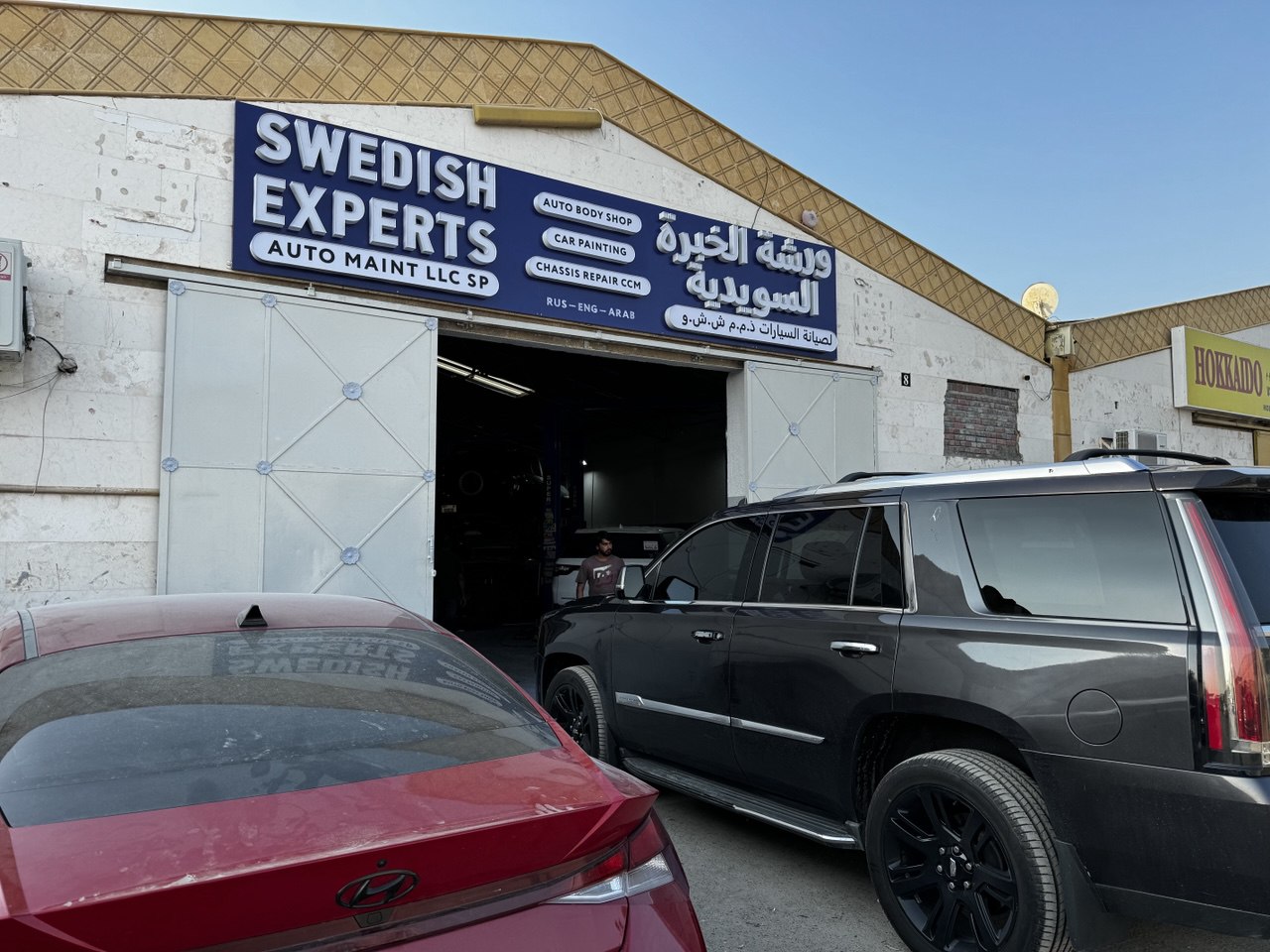
Pro tip: Many quality workshops in Dubai will assist with arranging towing if you call them. For instance, if you plan to use Swedish Experts (a trusted auto workshop) for repairs, you can ring them once the breakdown is under control – they may guide you or coordinate with a towing service to bring your car in. Keep reading to see why choosing the right repair shop after a breakdown matters.
After the Breakdown: Repairing Your Vehicle
Once your car is off the road, the final step is addressing the problem that caused the breakdown. This often means taking your vehicle to a garage for diagnosis and repair. Dubai offers a range of options for car repair – from dealership service centers to independent workshops. Here’s a comparison to help you choose the best post-breakdown repair solution:
Repair Option
Description
Pros
Cons
Dealership Service Center
Official workshop of your car’s manufacturer (e.g. Al Tayer for Ford, AGMC for BMW).
Factory-trained technicians; guaranteed genuine parts; maintain warranty and recall record.
Expensive labor rates and parts costs (often 30–40% higher); longer wait times for appointments; tends to upsell services not under warranty.
Independent Local Garage
General auto repair shop (varying size/quality).
Lower costs than dealers; often quicker service; convenient neighborhood locations.
Quality can vary widely – some lack advanced diagnostic tools or brand expertise; risk of non-genuine parts; no official warranty support.
Specialized Workshop (e.g. Swedish Experts)
High-end or specialist garage with expertise in certain brands or repair types. Swedish Experts, for example, is a UAE workshop known for precision chassis and frame repairs, as well as full mechanical services for luxury vehicles.
Expert technicians with specific training; advanced equipment (on par with dealerships); likely to use quality or OEM parts; more personalized customer service. In the case of Swedish Experts, they specialize in restoring cars to manufacturer standards after collisions and breakdowns, ensuring safety and performance.
Slightly higher cost than a basic local garage (due to superior equipment and certified staff), but still often more cost-effective than dealerships. May be located a bit farther from your area (e.g. Swedish Experts’ main workshop is in Sharjah, serving Dubai drivers). Typically not for on-the-spot minor fixes – focused on thorough repairs at the workshop.
As shown above, choosing a trustworthy repair shop is crucial. If your car is under warranty or you prioritize manufacturer service, a dealership might be your first choice. However, once out of warranty, many UAE drivers opt for reputable independent garages to save on costs without sacrificing quality. Whichever you choose, ensure the garage is RTA-approved or well-reviewed for professionalism.
We highly recommend contacting Swedish Experts for post-breakdown repairs. They have a strong reputation in the UAE for high-quality automotive service – specializing in everything from mechanical repairs and electrical fixes to advanced chassis alignment and accident repairs. Their team uses state-of-the-art equipment (like CAR-O-LINER frame machines) to restore vehicles to prime condition. Many Dubai car owners trust such specialized workshops to handle complex issues that regular garages might miss. Important: Swedish Experts is not a towing service, so you wouldn’t call them at the moment of breakdown for roadside help. Instead, once your car has been towed or once you’ve arranged a recovery, you can have your vehicle delivered to the Swedish Experts workshop. You can call ahead to inform them your car is coming; their advisors can then be ready to assess the vehicle and provide a detailed diagnosis and repair plan.
During the repair process, communicate with the mechanics about what caused the breakdown. Ask for a detailed inspection – often, something like an overheated engine could have underlying causes (coolant leaks, fan issues) that need addressing to prevent future incidents. In the UAE, approved workshops will also ask if you have a police report in cases where a breakdown involved any accident or damage – for example, if your car was hit while broken down, a police report is needed for insurance claims. Make sure you obtain that report if applicable.
Before approving major repairs, get an estimate of cost and time, and clarify if parts need ordering. Trusted shops like Swedish Experts will be transparent about what needs fixing immediately versus what is preventive. They can also provide guidance if an insurance claim is relevant (note: insurance typically covers accident damage, not mechanical breakdowns, unless you have specific coverage).
Preventive Tips to Avoid Future Breakdowns
After you’ve gone through a breakdown, you’ll likely want to minimize the chance of it happening again. While not every emergency is preventable, regular maintenance and preparedness go a long way:
Keep Up with Maintenance: Routine servicing is your best defense against breakdowns. Change oil and filter on schedule, flush coolants, and check your car at least every 5,000–10,000 km as recommended. Many breakdowns (overheating engines, engine failures) stem from missed service intervals. It’s advised to service your car every 3–6 months in the UAE climate. Don’t ignore warning lights on your dashboard – they are early warning signs.
Check Tyres and Battery: Tyre blowouts and battery failures are leading causes of roadside trouble in the UAE. Inspect your tyre pressure and tread regularly; high heat can weaken tyres, so consider replacing them if you see cracks or worn treads. Carry a portable tyre inflator or at least ensure your spare tyre is in good shape. For batteries, extreme heat shortens their life – typically, a car battery lasts 2–3 years here. If yours is older or showing slow starts, get it tested or replaced proactively.
Watch Fluid Levels: Make it a habit to check engine oil, coolant, and brake fluid levels periodically (for example, every few fuel fill-ups). An engine low on oil or coolant is prone to overheating and breakdown. Top up fluids as needed, and fix any leaks promptly. Also, use good quality fuel from reputable petrol stations; poor fuel can cause engine stalling or injector issues.
Carry an Emergency Kit: Always have some basic emergency items in your car. At minimum, include: a reflective warning triangle (required by law), a first-aid kit, a flashlight (and extra batteries), a reflective safety vest, jumper cables, a tyre repair kit or spare tyre with jack, a multi-tool, water bottles, and a phone charger or power bank. These items will help you handle minor issues and stay safe while waiting for help. For instance, a simple battery jump-start from your cables might save you a tow if it’s just a dead battery. And in summer, water is critical in case you’re stranded longer than expected.
Know Your Emergency Contacts: Save key numbers like the ones listed above (police, RTA, your insurance, a trusted workshop) in your phone. Consider also having them written on a card in your glovebox – in case your phone dies when you need it. That way, anyone helping you can make the call.
Drive Smart: Lastly, adapt your driving to UAE conditions. Try not to run your fuel tank to near-empty, especially on highways or during hot weather – running out of fuel on the road is preventable and can incur fines. If you notice any sign of trouble while driving (weird noises, temperature gauge rising, warning lights), don’t push on; find a safe spot to stop before a breakdown happens. Early action can turn a potential highway breakdown into a safer parking-lot stop. And always plan for long trips by getting your car checked (especially tires and coolant) and carrying extra water.
By following these tips, you reduce the likelihood of finding yourself stuck on the roadside again. As the saying goes, prevention is better than cure – a well-maintained car is far less likely to let you down.
Breaking down in Dubai – whether on a busy Sheikh Zayed Road or a back street in Deira – is certainly stressful, but it can be managed safely with the right approach. Stay calm, get to safety, alert others, and call for help. The UAE’s authorities (Dubai Police, RTA, etc.) are well-equipped to assist drivers in such situations, and there’s no shame in asking for help – it’s expected as part of road safety etiquette. Always remember to use your hazard lights and warning triangle, as these are both life-savers and legal requirements.
Once the immediate crisis is over and your car is off the road, focus on getting the problem resolved the right way. Choose a repair solution that gives you peace of mind – for many, that means trusted workshops like Swedish Experts that can thoroughly fix the issue and check for any other damage. Swedish Experts can be your go-to partner for post-breakdown repairs, ensuring your vehicle is restored to optimal condition with professional care. With their expertise, you can drive again with confidence.
Ultimately, being prepared and informed is your best tool. Keep those emergency numbers handy, don’t skip maintenance, and consider having a plan (even if it’s “call Swedish Experts to handle it”). By following the advice in this guide, private car owners and drivers in Dubai can tackle breakdowns in an organized, safe manner – whether in the heart of the city or on the open highway. Safe driving, and rest assured that if your car does break down, you now know exactly what to do to stay safe and get moving again.